
Last updated August 25, 2026
Free on-site gate assessment - hinges, posts, and your LiftMaster or Nice gate operator checked before anything is quoted
The assessment is free and the quote is the invoice.


 Before
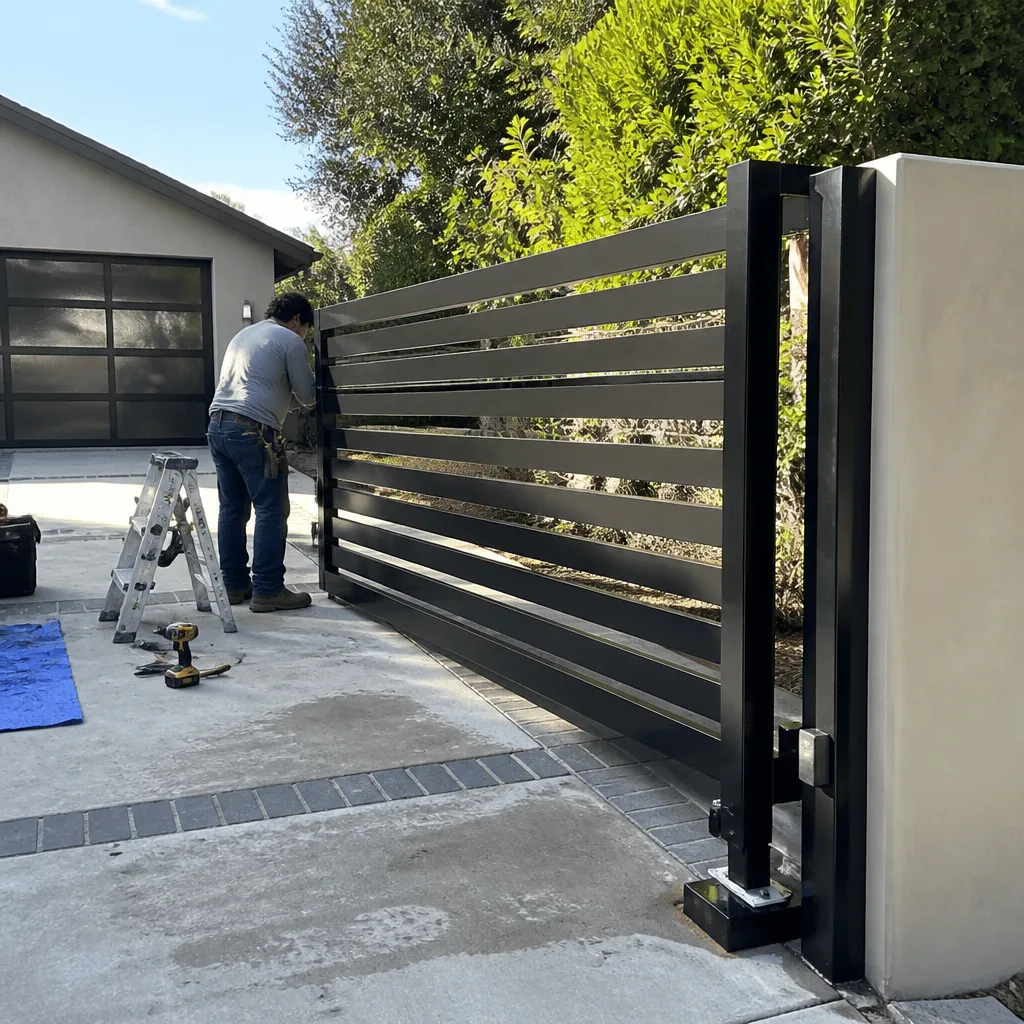 After
After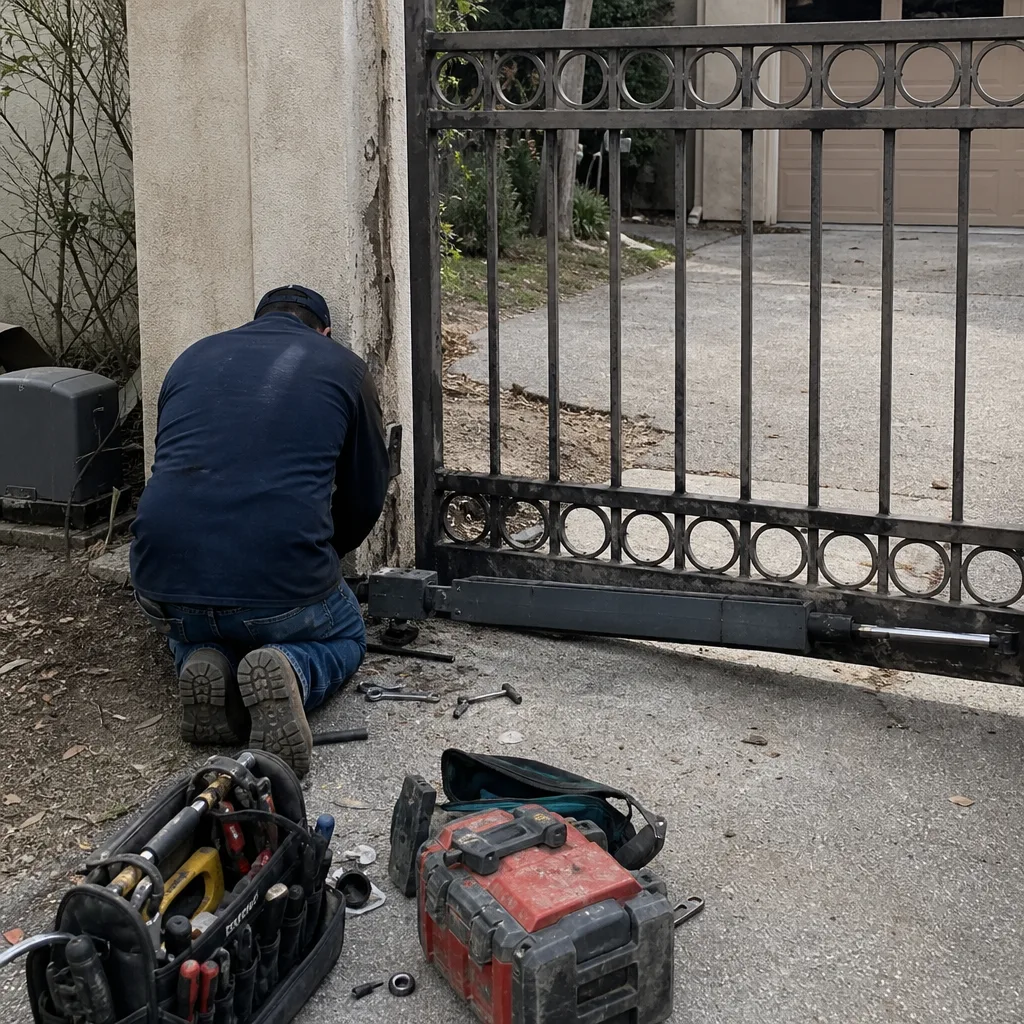 Before
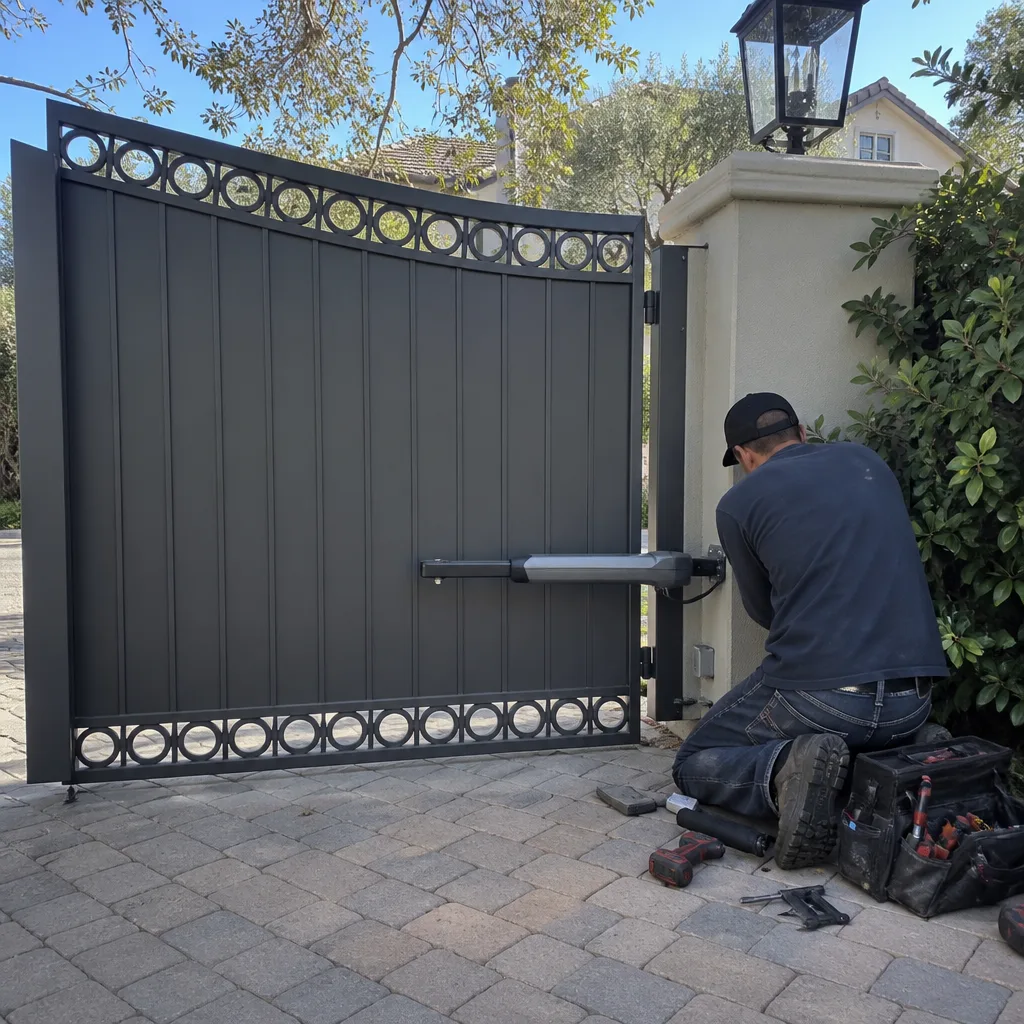 After
After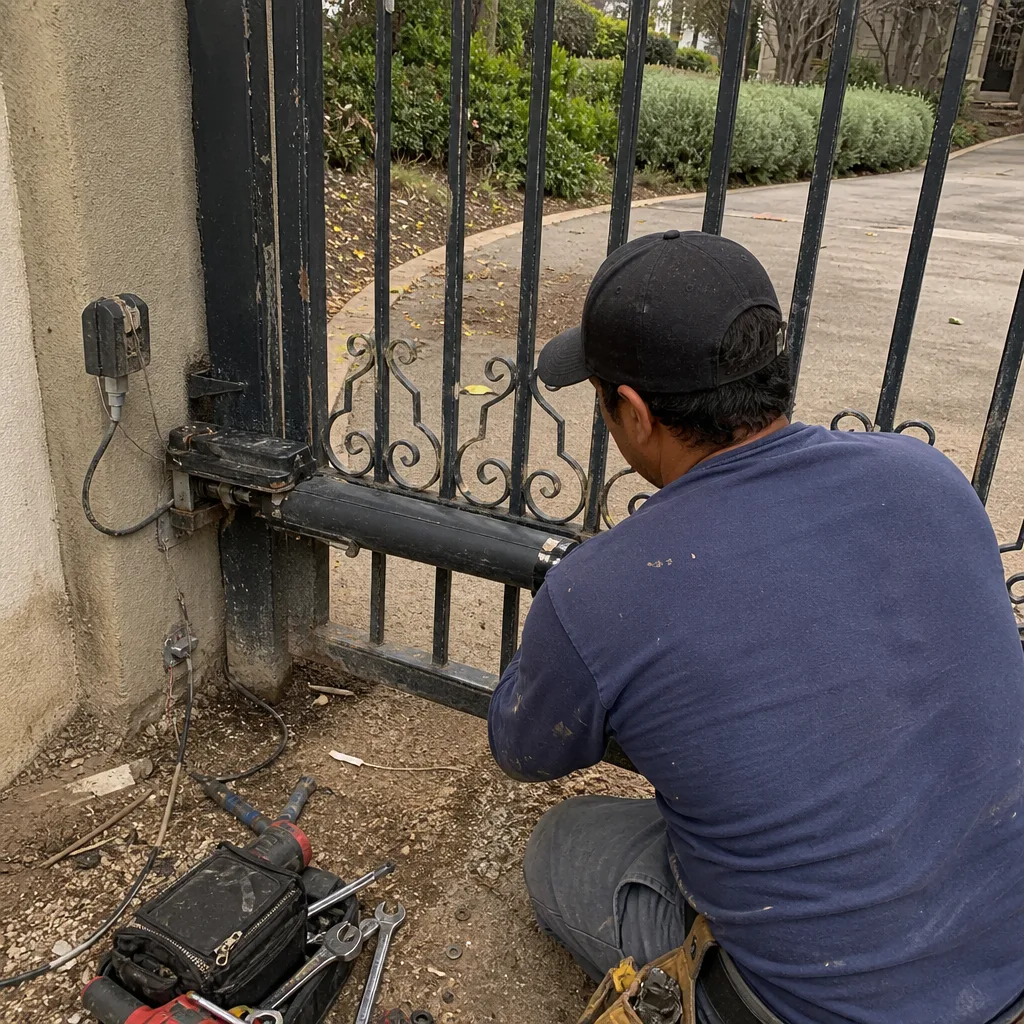 Before
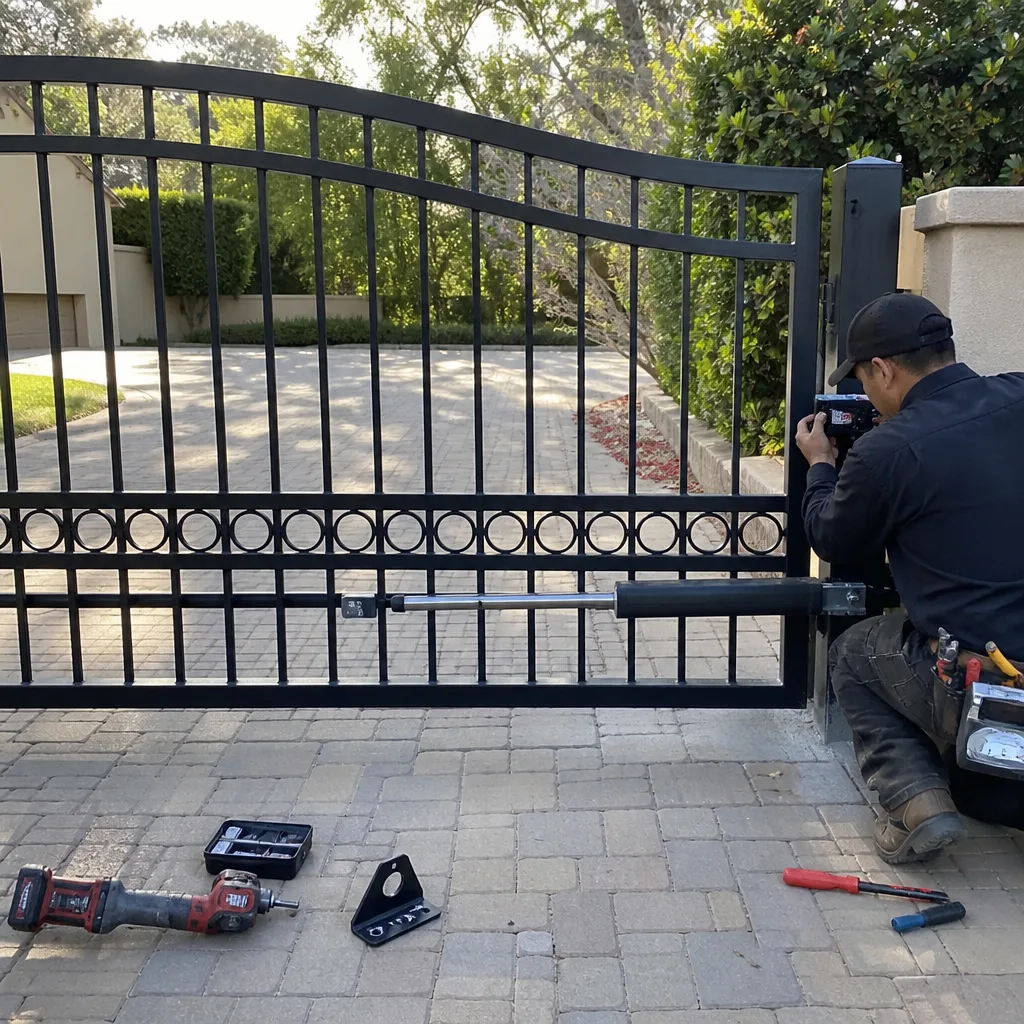 After
AfterGate Repair Maintenance Checklist for Calabasas Homeowners
Most gate failures in Calabasas don’t start with a bang. They start with a shrug: a gate that hesitates for half a second before it opens, a hinge that groans a little louder than it did last month, a keypad that makes you punch the code twice. By the time a driveway gate actually refuses to move, months of small neglect have usually done the real damage. This guide walks you through the exact maintenance routine we recommend to Calabasas homeowners after 42 years of working on residential gates, what to check monthly, what to watch for each season, and when a problem is small enough to leave alone versus when it is about to get expensive.
Quick Answer
A Calabasas driveway gate should be inspected once a month, lubricated on its hinges and moving parts every two to three months, and given a deeper seasonal going-over four times a year, especially before winter rains and summer heat. The most common repair triggers we see are dry or rusted hinges, misaligned photo-eye sensors, and dead opener batteries or capacitor failures from heat. Staying ahead of those three things prevents roughly 80% of the breakdown calls we take in this area.
Table of Contents
- Why Calabasas Gates Fail Differently
- The Monthly Ten-Minute Check
- The Seasonal Maintenance Routine
- Hinges, Welds, and the Metal Itself
- Gate Openers and Motors: What Wears Out First
- Safety Sensors and Edge Protection
- Lubrication, Done Correctly
- Common Mistakes to Avoid
- When to Call a Professional
- Frequently Asked Questions
- The Bottom Line
Why Calabasas Gates Fail Differently
A gate in Calabasas lives a different life than a gate in Burbank or Thousand Oaks. The summer heat here does not just make the metal hot to the touch; it bakes the grease out of hinge pins, hardens wiring insulation inside opener arms, and pushes capacitor temperatures to the edge of what they’re rated for. We have replaced more heat-failed capacitors in Calabasas in a single August than most gate companies see in a year. Then the winter swings the other direction: overnight temperatures drop, metal contracts, and any hinge or weld that was slightly out of alignment suddenly binds. Add in the fine dust that blows through the foothills and settles into track channels and roller bearings, and you’ve got a maintenance environment that demands more attention than a coastal property ever will. The good news is that Calabasas gates are mostly built well. The homes here tend to have heavier gates, which means heavier steel, which means the structure usually outlasts the moving parts. It is the small components that fail first: hinges, wheels, sensors, opener gears, keypads. Understanding that pattern changes how you maintain the gate.
The Monthly Ten-Minute Check
Once a month, walk out to your gate with a cup of coffee and ten minutes to spare. You don’t need tools for this. You need your eyes, your ears, and your hands. This is the single habit that keeps small issues from becoming weekends without access to your driveway, and it’s the same routine we run when we arrive for a service call in Calabasas before we touch a wrench.
What to Do Each Month
- Run the gate through one full open and close cycle. Stand where you can see the hinges, the wheel or track, and the opener arm. Watch for jerking, hesitation, or any point where the gate seems to work harder.
- Listen. A properly maintained gate is quiet. A groan means dry hinge pins. A squeal means a wheel bearing going dry. A rattle means something is loose. A grinding sound from the opener means the internal gear is wearing and should be looked at before it strips completely.
- Put your hand on the gate mid-cycle. Light pressure should not stop the gate. If the gate binds, chatters, or pushes back against you, the track or hinge alignment has shifted.
- Check all visible bolts and nuts. Look at the hinge brackets, the opener mounting plate, the wheel assemblies, and any welded joints. If you can see rust staining around a bolt head, that bolt is loosening.
- Check the photo-eye sensors. These are the small black boxes mounted low on each side of the gate opening, usually a foot off the ground. Make sure they are still pointing at each other and that nothing is blocking the beam: no overgrown rosemary, no trash can, no garden hose.
- Walk the full length of the gate track, if the gate is on wheels. Pull out leaves, twigs, pebbles, and caked dirt. In Calabasas, decomposed granite from walkways and driveways finds its way into V-track channels quickly, and it grinds against wheels like sandpaper.
- Test the safety reverse. While the gate is closing, put your hand or a broom handle in the path where the photo-eye beam crosses. The gate should stop and reverse immediately. If it doesn’t, stop using the gate and call for service the same day.
- Test the keypad and any remote or intercom. Dead batteries in a keypad are an easy fix, but a keypad that’s fading, flickering, or intermittent may have water intrusion, and Calabasas sees enough morning fog and winter rain to make that a running problem.
If all eight things pass, your gate is in good shape. Total time: ten minutes. That’s a better return on maintenance time than almost anything else on your property.
The Seasonal Maintenance Routine
Four times a year, or at minimum before summer and before winter, give the gate a deeper inspection. This is when you address the things the monthly check can’t see: battery health, lubrication depth, and the long-term wear that only shows up with the opener cover off. The seasonal routine takes about forty-five minutes, and in our experience, it is the difference between a gate that lasts fifteen years and one that needs major work in eight.
Spring and Fall: The Main Service Seasons
- Lubricate every moving metal point. Hinge pins, wheel bearings where accessible, the opener arm pivot, and any chain drive. Use a dry lubricant with PTFE or a white lithium grease. Wipe away old grease first; adding fresh grease on top of caked dirt creates an abrasive paste.
- Inspect the opener cover for cracks or missing screws. A cracked cover lets water in during winter rains, and water on a circuit board is almost always a full board replacement. This is one of the most expensive avoidable repairs we see in Calabasas.
- Check the backup battery, if equipped. Gate opener batteries usually last three to five years. If the battery is swollen, warm to the touch, or more than four years old, replace it before Santa Ana winds knock out power and the gate won’t move.
- Look for rust. Calabasas is dry most of the year, but morning marine layer moisture plus overnight condensation is enough to start surface rust on untreated or scratched steel. Treat any bare metal with a rust converter and a quality primer, or call a welder before the rust gets structural.
- Clean the track thoroughly. Hose it out if the material allows, then dry it and inspect the wheels for flat spots. Flat-spotted wheels make the gate lurch and will eventually damage the track.
- Check the gate’s sag. With the gate in the closed position, look at the horizontal line where the gate meets the fence or post. A gate that has dropped more than half an inch at the far end is telling you the hinge posts are moving or the hinge pins are worn.
Summer and Winter: The Stress Seasons
In summer, the heat does its worst work on electronics and grease. Keep hinges lubricated more frequently in July, August, and September, and watch for the opener motor to run warmer than usual. In winter, the battle is moisture and cold snaps. Check that all wire connections inside the opener are tight and corrosion-free, and make sure drainage around the gate posts hasn’t shifted so water pools at the base. A little seasonal attention at the solstice is far cheaper than a service call at midnight.
Hinges, Welds, and the Metal Itself
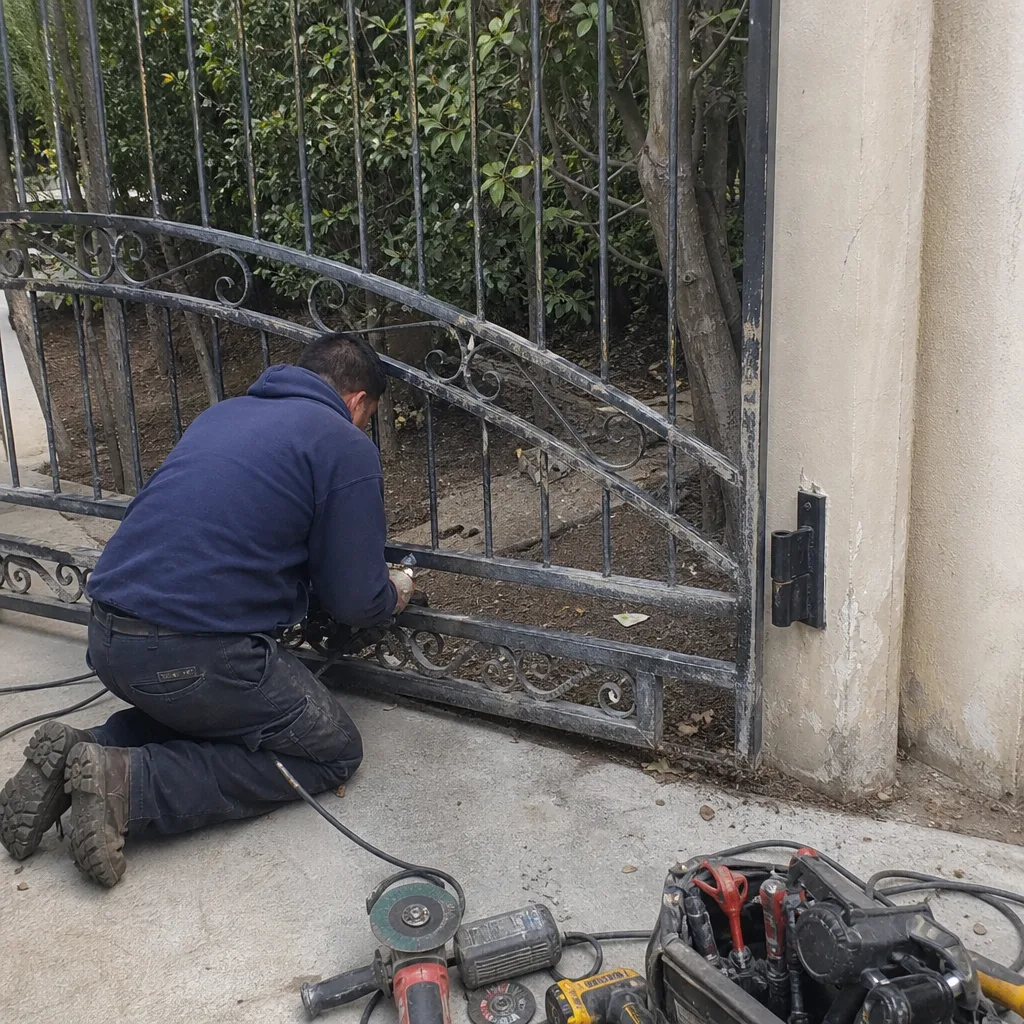
The hinges are where the whole weight of the gate lives. On a steel driveway gate in Calabasas, we’re regularly talking about 300 to 800 pounds hanging on two or three hinge points. That’s why hinge wear is the number one structural issue we repair. The symptoms show up gradually: the gate scrapes the ground on the latch side, the gap between gate and post narrows at the top, or the gate just feels heavy when you swing it manually. Here’s what’s actually happening: the hinge pin is wearing inside the barrel, or the weld attaching the hinge to the post or gate is cracking. Welds crack for the same reason anything else fails under repeated load, because the gate cycles thousands of times a year, and every cycle flexes the weld slightly. Over years, that flex fatigues the steel. Calabasas sees fewer rust failures than beach communities, but we do see weld fatigue and dry-pin wear on gates that have been hung since the 1980s and 1990s, and there are thousands of those gates in this town. If you spot a cracked weld, do not try to grind and re-weld it yourself unless you’re a certified welder. A hinge weld failure under load can drop half a ton of steel on someone. This is one of the areas where we strongly recommend calling a professional who welds drive gates for a living.
What you can do safely: inspect the weld visually. Clean off dirt so you can see the weld bead clearly. Look for hairline cracks running across the bead or along its edge. Put your hand on the hinge while the gate is moving and feel for a tick or knock. And listen to the gate as it moves: a deep, rhythmic creak that isn’t fixed by lubrication usually means the pin itself is worn and the hinge needs to be replaced, not oiled.
Gate Openers and Motors: What Wears Out First
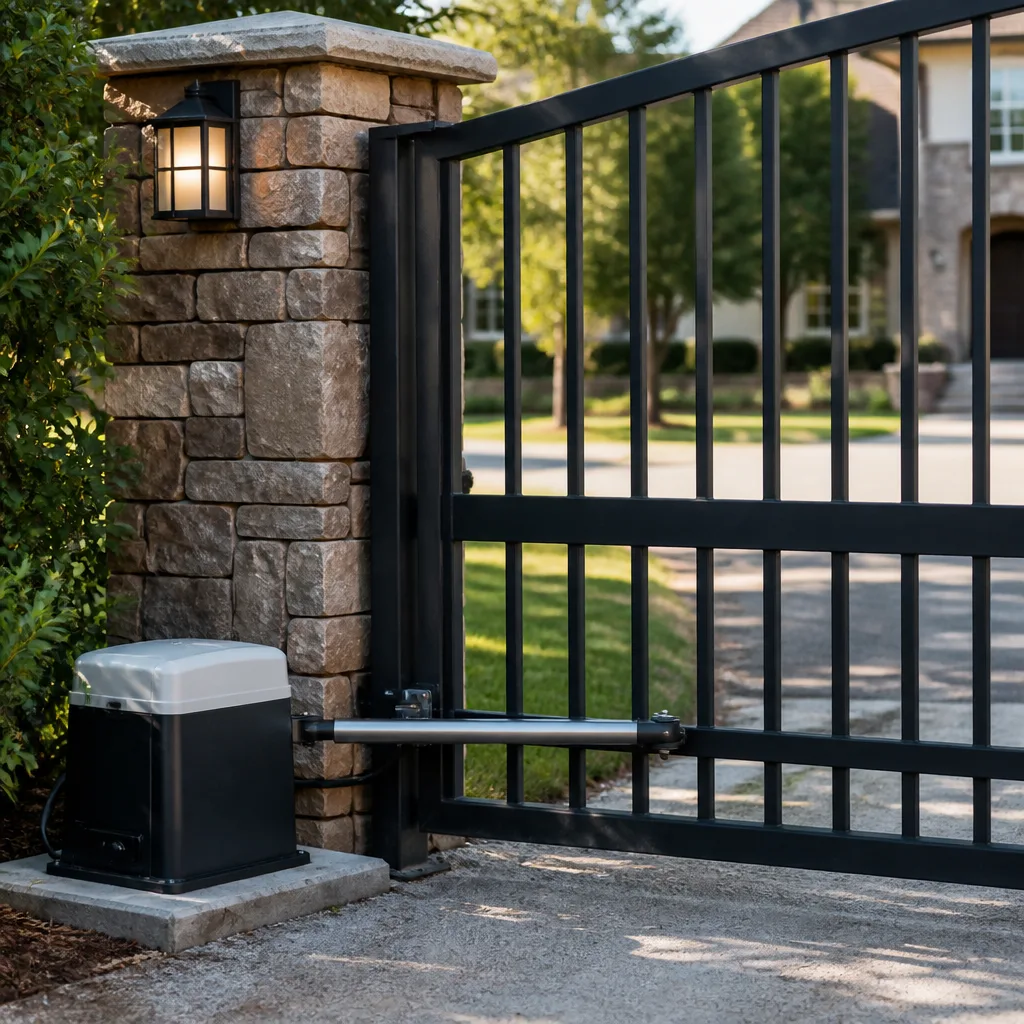
The gate opener is the part homeowners worry about most, and it’s also the part they tend to misunderstand. A gate opener is not a garage door opener. It works harder, lives outdoors, and runs a much heavier load. Most residential swing gate openers are rated for a certain number of cycles per day, and they last longest when they are properly matched to the gate’s weight and length. We see two failure patterns in Calabasas more than anywhere else: capacitor failure in the summer, when ambient heat pushes internal temperatures past the capacitor’s rating, and stripped plastic gears inside the opener, which usually happens when the gate is binding somewhere and the opener has been fighting the extra friction for months. Here’s the checklist for keeping the opener healthy:
- Listen to the opener run once a month. It should be steady and even. A grinding sound inside the opener means the gear is on its way out.
- Keep the opener cover sealed. A small crack in the cover is enough to let rain in during a winter storm, and a wet control board is a replacement, not a repair.
- Don’t ignore the battery. If your opener has a backup battery and you hear about power outages in Calabasas, test it seasonally. Batteries fail quietly.
- Watch the force adjustment. If the opener’s force setting has been dialed all the way up to keep the gate moving, the opener is working too hard. That means gate binding, worn hinges, or wheel problems, and the opener will fail early.
- Check the manual release regularly. Every opener has a manual release so you can move the gate by hand during a power outage. It should pull easily. If it’s stuck or seized, the cable or mechanism needs attention before the next outage.
We service and program openers from LiftMaster, DoorKing, and Elite on a daily basis in Calabasas, and the same maintenance rules apply across all three. The opener is a motor, a gear, a board, and a battery. Keep the motor dry, the gear unstrained, the board covered, and the battery fresh, and you’ll get years past the average service life.
Safety Sensors and Edge Protection
Safety devices on a gate are not optional, and they’re not accessories. In California, all automated gates installed after a certain point are required to have photo-eye sensors and, for many configurations, safety edges that reverse the gate when they contact an obstruction. These devices exist to protect people, pets, and vehicles, and they are also the most common source of false gate problems: a gate that won’t close is often just a photo-eye that’s been knocked out of alignment. The good news is that sensor maintenance is something a Calabasas homeowner can handle without any special training. Clean the sensor lenses with a dry cloth every month. Dust builds a film quickly here, and a dusty lens diffuses the infrared beam enough to trigger a false obstruction. Make sure the sensors haven’t been bumped by a car, a delivery truck, or a trimming crew. And walk the beam path: branches grow, hedges expand, and a bougainvillea that was six inches clear of the beam in spring can block it by Labor Day. If the sensors are misaligned, most have a small indicator light that shows alignment. Adjust them gently until the light goes solid, then test the gate twice. If the gate still won’t close, stop and call a pro before bypassing anything. Under no circumstances should anyone jump or bypass a safety sensor on a drive gate. A closing gate that doesn’t reverse can injure a child or a pet, and we will not wire around a safety device for any customer. That’s a line we don’t cross.
Lubrication, Done Correctly
Lubricating a gate is simple, and it’s also the most frequently botched maintenance step we see. The mistake is almost always the same: the wrong product. WD-40 is not a lubricant. It’s a water displacer and a solvent, and using it on gate hinges strips away the heavier grease that was doing the actual work and leaves the pin drier than before. The same goes for silicone sprays in many cases: they’re too light for the load a driveway gate hinge carries. What we recommend for Calabasas gates is a white lithium grease or a PTFE dry lubricant on hinge pins and opener arm pivots, and a heavier marine-grade grease if the gate is exposed to direct sun all day. Here’s the method that gets it right:
- Clean first. Wipe the hinge and pin with a rag to remove old grease and accumulated dust. If the old grease is caked, use a light degreaser, then dry the area thoroughly.
- Apply sparingly. You don’t need much. A thin coat on the pin and inside the barrel where you can reach it. Over-lubrication drips onto concrete and attracts dust, which turns the grease into grinding paste.
- Work the gate after applying. Run the gate through two or three cycles so the lubricant distributes into the barrel and around the pin.
- Clean up drips. Wipe excess from around the hinge so it doesn’t collect dust or stain the concrete.
- Repeat every two to three months, or monthly during the hottest part of summer.
This one habit will add years to hinge life, and it costs about four dollars a year. For the opener, skip the grease entirely unless the manual calls for it on the chain or screw drive. Most modern openers from DoorKing and LiftMaster are sealed and don’t want homeowner lubrication inside the housing.
Common Mistakes to Avoid
- Using WD-40 as a lubricant on hinges. It strips proper grease and leaves the hinge dry within weeks. The gate gets noisier, the pin wears faster, and you repeat the cycle thinking it needs more WD-40.
- Ignoring a gate that’s getting louder. Sound is a diagnostic. A gate doesn’t groan because it’s old; it groans because a metal part is dry or worn. The longer the noise runs, the more of the hinge or wheel has to be replaced.
- Powering through a gate that binds. If the opener has to push hard, it’s burning through its gear train faster than design life. Fix the binding, don’t turn up the force setting. That’s the gateway to a stripped gear and a $1,200 opener replacement.
- Painting over rust without treating it. Rust is a chemical reaction that continues under paint. Encapsulating it just hides the problem while the steel keeps oxidizing from the inside out.
- Neglecting the safety reverse test. We talked about this above, and we’ll say it again here: the safety test should happen monthly. A photo-eye that’s failed silently is an accident waiting for a distracted moment.
- Letting vines or landscaping grow into the gate or track. Calabasas yards grow fast with irrigation, and ivy, jasmine, and bougainvillea will crowd a track, fill a sensor path, and eventually trap a gate. Keep growth at least eighteen inches clear of any moving part.
- Buying a replacement opener without matching it to the gate. An opener sized for a pedestrian gate will not survive a 600-pound driveway gate. Match the opener rating to the gate weight, length, and daily cycle count.
When to Call a Professional
Some things on a gate are owner-maintainable, and some are not. The line is bright, and it’s worth respecting: anything involving a high-tension component, a cracked weld, an energized opener board, or a gate that has dropped far enough to change its weight distribution is a job for a trained technician. Steel is unforgiving when it fails, and a driveway gate carries enough mass to cause permanent injury. If the gate has come off its track, if a hinge weld is cracked, if the opener makes grinding noises, or if the gate has sagged more than half an inch, stop and call someone who works on this exact equipment for a living. Ironworks Gate Co. offers free estimates for Calabasas homeowners, and we are happy to come out, tell you exactly what’s wrong and what it costs, and leave the decision with you. Call (747) 308-3262. A live person answers, day or night.
Frequently Asked Questions
A driveway gate in Calabasas should be inspected by the homeowner once a month and professionally serviced once a year. The annual service should include a full opener diagnostic, hinge and weld inspection, lubrication, safety device testing, and battery health verification. In our experience, gates that get a yearly service along with monthly homeowner checks last significantly longer than gates that only see a technician when something breaks.
Gate repair in Calabasas typically runs from $180 to $450 for common fixes like hinge replacement, sensor alignment, or keypad repair, while opener replacement and structural welding jobs range from $800 to $3,000 depending on the gate size and opener brand. Every quote from Ironworks Gate Co. includes the price before work begins, so there’s no surprise on the invoice. Call (747) 308-3262 and we’ll give you a free estimate over the phone or in person.
We are trained and equipped on nine major gate automation brands, including DoorKing, LiftMaster, and Elite, plus FAAC, BFT, Linear, Viking, Ghost Controls, and Mighty Mule. That covers the overwhelming majority of residential openers in Calabasas, and it means the correct fix happens on the first visit instead of a guess-and-check approach. If you’re not sure what opener you have, call us and we’ll help identify it from the photo on the housing.
A gate that stops halfway and reverses is almost always seeing an obstruction signal from the photo-eye sensors or safety edge. The most common causes we find in Calabasas are misaligned sensors, a dirty sensor lens, a branch that has grown into the beam path, or a damaged safety edge that’s shorting. Start by cleaning the sensor lenses and checking alignment; if the problem persists, call for service rather than adjusting force settings higher.
You can, but we advise against it for most homeowners. Gate openers run on household voltage, require precise force and limit adjustments, and must be matched to the gate’s weight, length, and usage pattern. Most DIY opener replacements we see in Calabasas result in either a gate that doesn’t run correctly or an opener that fails within a couple of years because it was undersized for the load. A professional installation costs more upfront, but it’s the difference between ten years of reliable operation and a second replacement in two.
For Calabasas heat, we have had consistently strong results with DoorKing and LiftMaster openers, both of which hold up well to sustained high temperatures when properly rated for the gate. Elite is another solid option we service regularly. The brand matters less than two other factors: matching the opener rating to the actual gate weight, and keeping the opener housing sealed against dust and the occasional storm. Pick the right size and maintain the housing, and most quality brands will serve you well.
The Bottom Line
A gate is not a set-it-and-forget-it appliance. It’s a moving steel structure that cycles thousands of times a year through Calabasas heat, dust, and the occasional downpour, and it asks for about fifteen minutes a month in return. Check the hinges monthly, lubricate every quarter, keep the sensors clean and aligned, replace opener batteries before they die, and respect the line between maintenance and repair. Do those things and the gate on your Calabasas driveway will outlast most of its components several times over. Skip them, and the gate will tell you exactly when you should have paid attention: usually at night, usually in the rain, usually right when you needed to get out.
Written by Victor Salinas, Owner at Ironworks Gate Co., serving Calabasas since 2013.