
Last updated August 25, 2026
Free on-site gate assessment - hinges, posts, and your LiftMaster or Nice gate operator checked before anything is quoted
The assessment is free and the quote is the invoice.
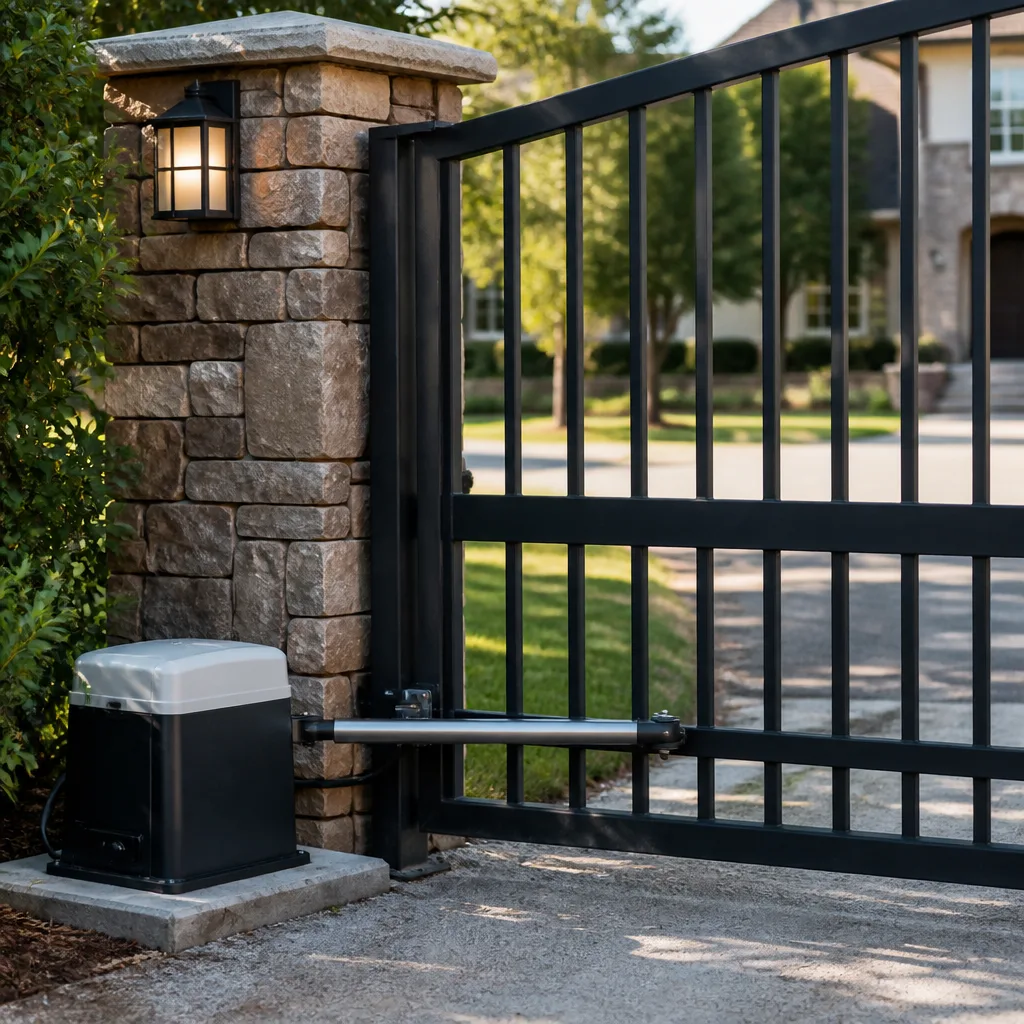
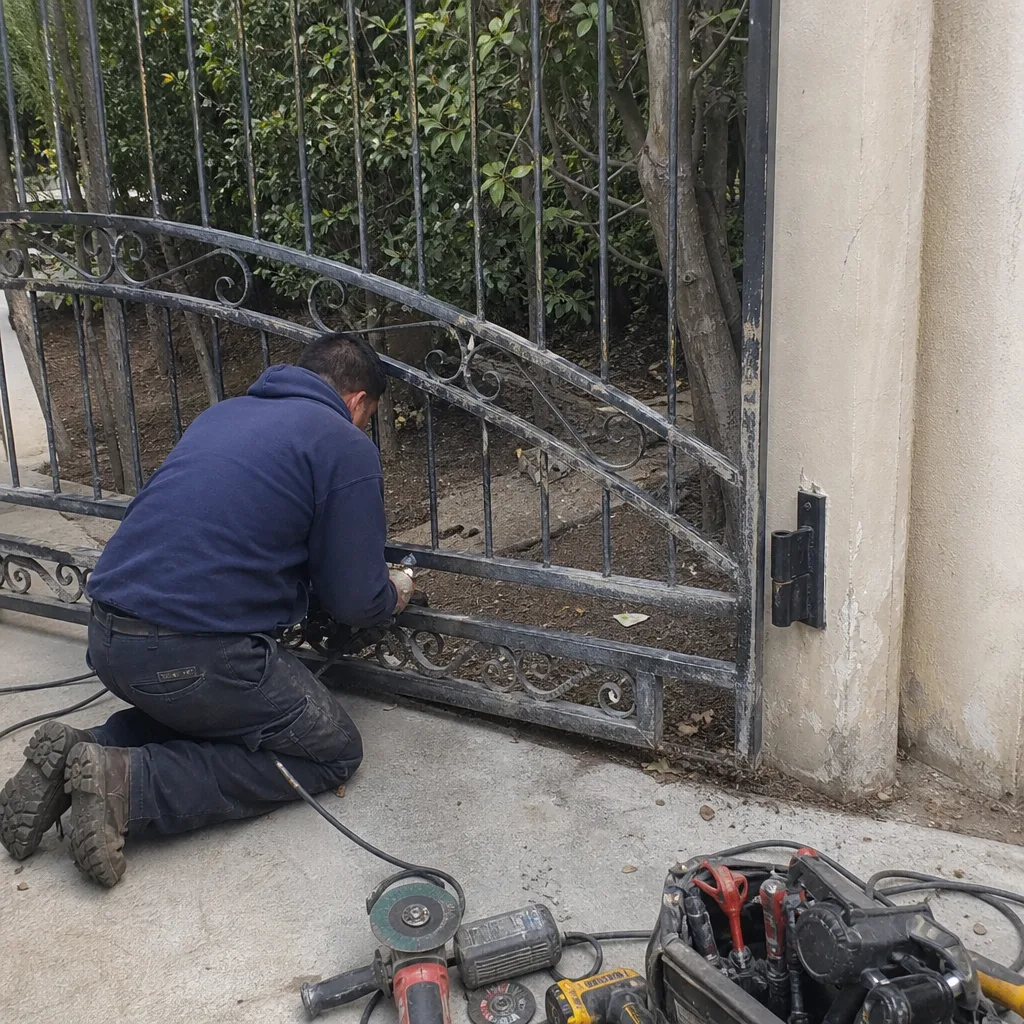 Before
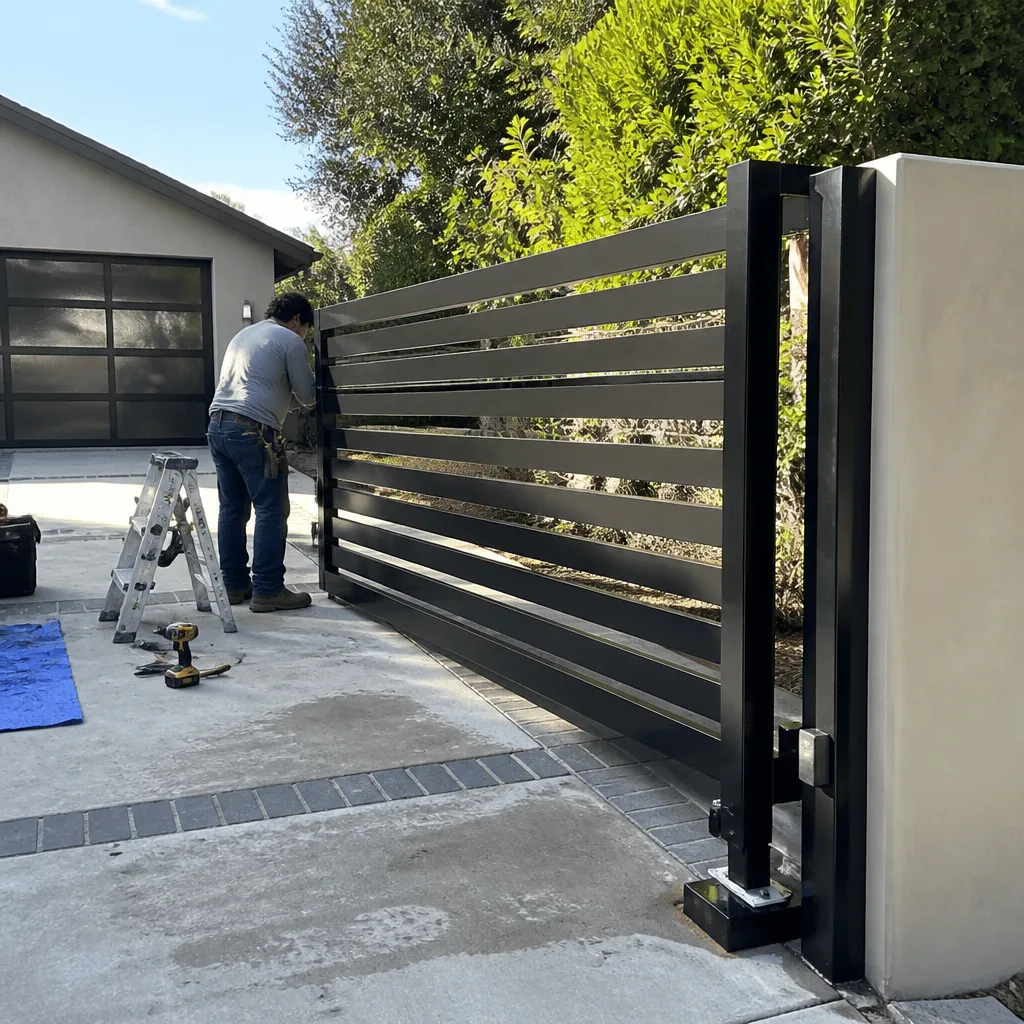 After
After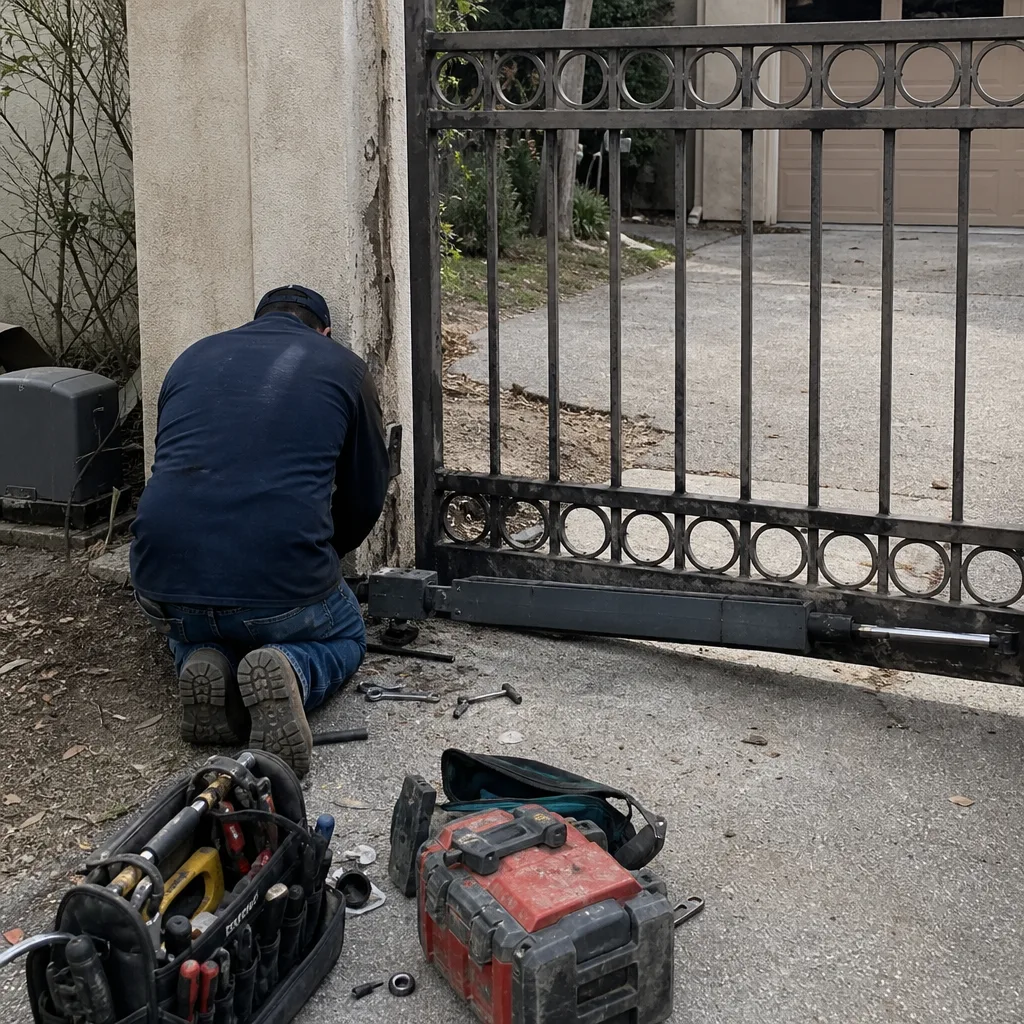 Before
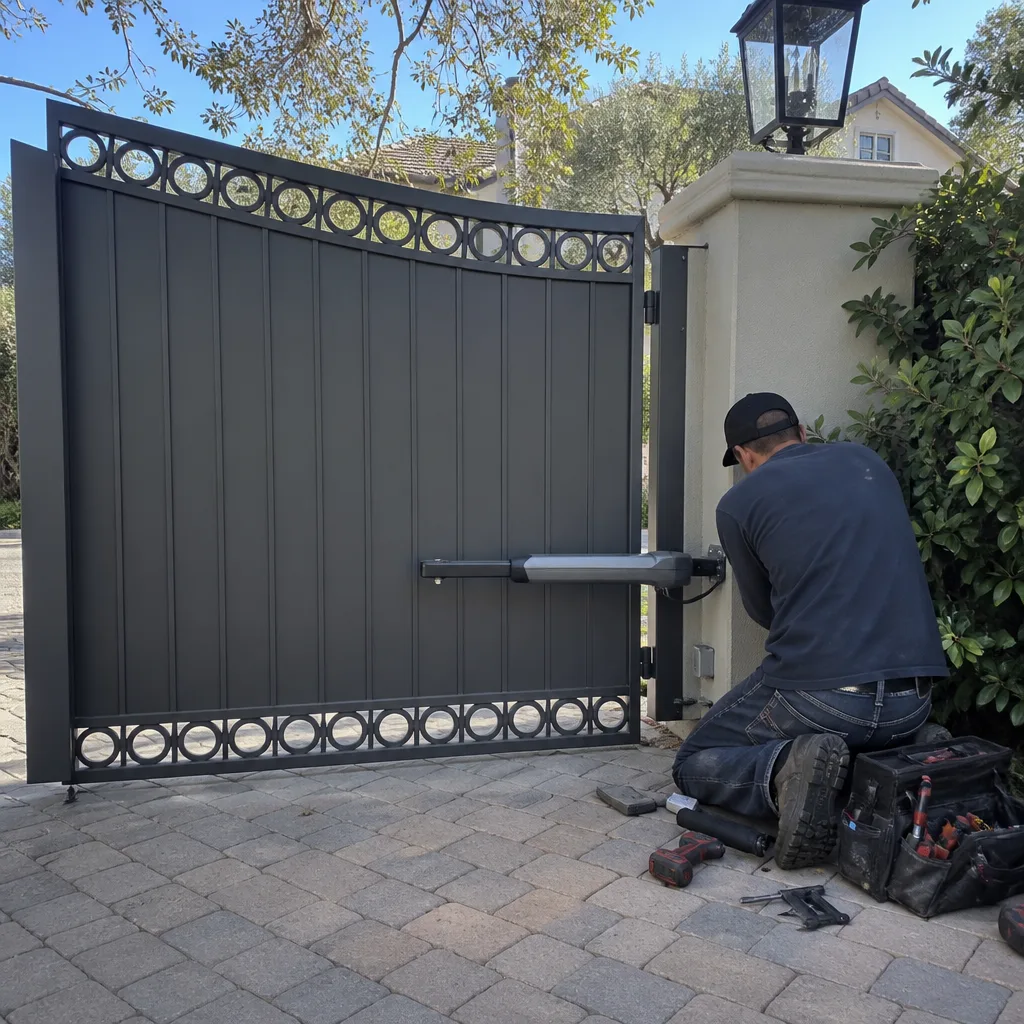 After
After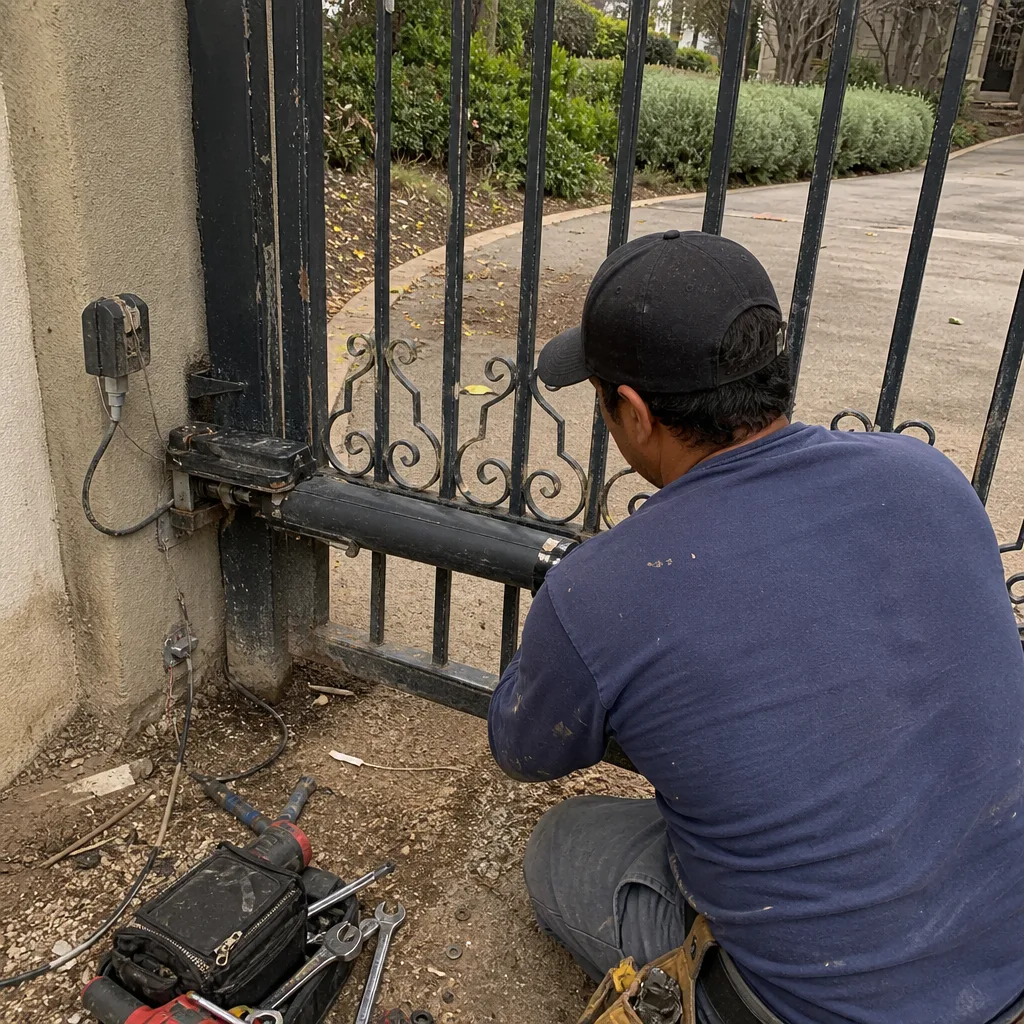 Before
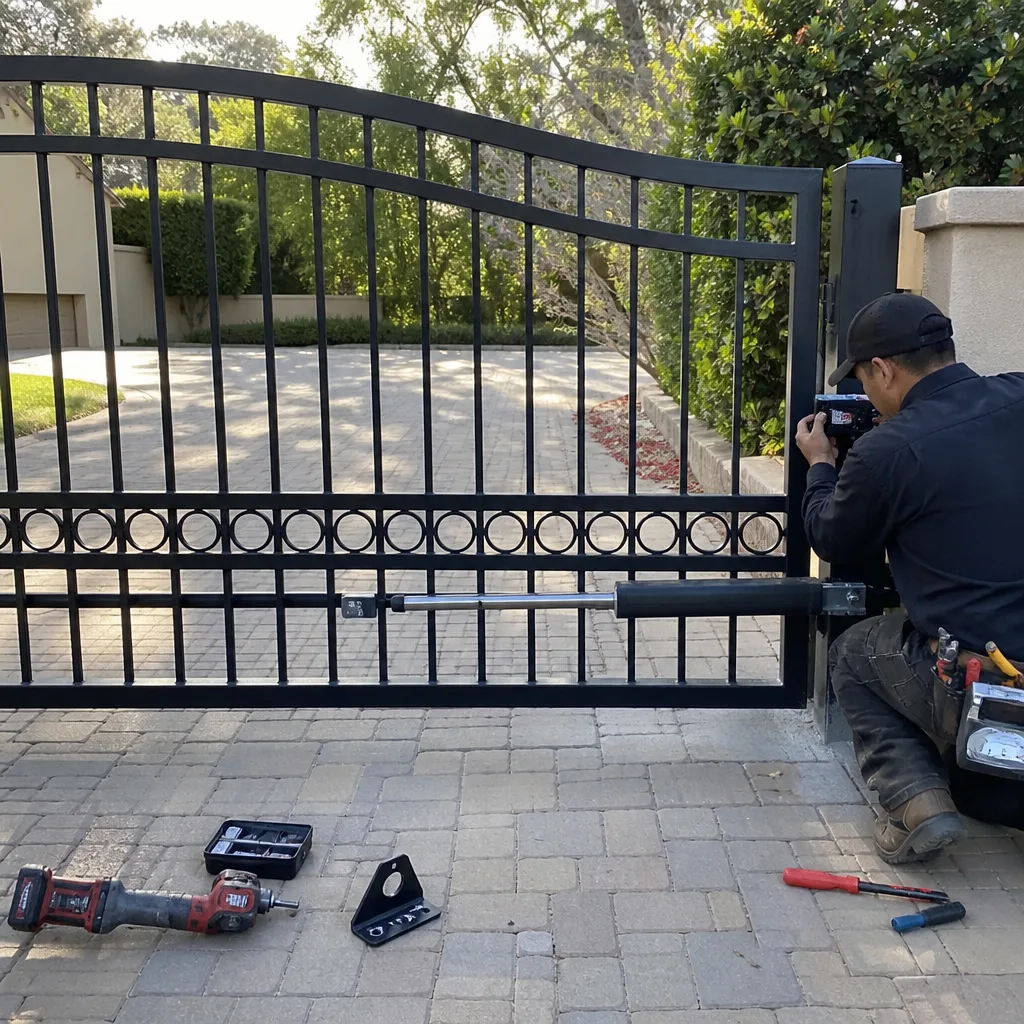 After
AfterGate Repair Permits, Codes & Inspections in CA: What You Need to Know
Here is something most California homeowners learn the hard way: the most expensive part of a gate repair is rarely the steel, the motor, or the labor. It is the correction work after a city inspector notices the gate was modified without a permit. In Calabasas and across Los Angeles County, a surprising share of gate work legally requires a permit, and the fines for skipping it can be double or triple the original cost of the permit itself. This guide walks through the permit triggers, the codes that govern gates, the inspection process, and how to avoid the mistakes that turn a simple repair into a costly redo.
Quick Answer
Most gate repairs in California do not require a permit, but the moment you alter the gate’s structure, replace a motor, change the footprint, or run new electrical, you cross into permit territory. A licensed contractor who knows Calabasas and LA County code can tell you in one phone call whether your project is exempt. When in doubt, a simple call to the building department is cheaper than the fine for guessing wrong.
Table of Contents
- When a Gate Repair Permit Is Required in California
- When No Permit Is Required
- California Building Codes That Govern Gates
- Electrical and Automation Codes for Gate Openers
- Fire Access, Safety Edges, and Setback Rules
- The Inspection Process Step by Step
- Calabasas and LA County Specifics
- Common Mistakes to Avoid
- When to Call a Professional
- Frequently Asked Questions
- The Bottom Line
When a Gate Repair Permit Is Required in California
California does not have a single statewide gate permit that applies everywhere. Each city and county adopts its own amendments to the California Building Code, and the threshold for a permit shifts from one jurisdiction to the next. In unincorporated Los Angeles County, the rules differ slightly from those in incorporated Calabasas. That said, certain triggers are consistent across nearly every city in the state.
A permit is generally required when the work involves any of the following:
- Structural alteration to the gate frame or posts. If a welded gate is being cut, re-framed, or extended beyond its original dimensions, the building department considers this new construction, not repair.
- Replacing or relocating gate posts. Pulling a post and setting it in new concrete changes the structure’s footprint. New concrete footings are structural work, and structural work requires a permit in Calabasas and most of California.
- Installing a new gate opener or motor where none existed before. This adds an electrical component to the gate and brings the installation under the California Electrical Code.
- Running new electrical to the gate. Any new conduit, new circuit, or new subpanel at the gate location is electrical work. In California, electrical work almost always requires a permit and an inspection.
- Increasing the gate’s height or width. A taller or wider gate catches more wind load. The building department needs to verify the new design still meets engineering standards for the additional surface area.
- Changing the gate’s swing direction. A gate that once swung inward but now swings outward toward the street changes the relationship between the gate and the public right-of-way. That is a plan-check item in most jurisdictions.
In our experience serving Calabasas and the surrounding hillside communities, the most common surprise involves gate openers. Homeowners often assume that adding a motor to an existing gate is a simple bolt-on. It is not. The electrical circuit, the safety sensors, the vehicle detection loops, and the emergency release all fall under code, and the work needs to be done by someone who understands the requirements before the concrete is poured.
When No Permit Is Required
Here is the relief valve: the majority of everyday gate repairs fall into the exempt category. If the work restores the gate to its original condition without changing its structure, its electrical system, or its footprint, you generally do not need a permit in Calabasas or anywhere else in California.
Exempt work typically includes:
- Replacing a worn hinge, roller, or wheel with a like-for-like part.
- Lubricating and adjusting an existing gate opener.
- Repairing or replacing a keypad, remote receiver, or loop detector using existing wiring.
- Welding a crack in a gate that has not deformed, as long as the gate’s dimensions and post positions do not change.
- Replacing a gate opener’s control board, capacitor, or battery backup on an existing permitted system.
- Replacing pickets, slats, or infill panels that do not change the gate’s height or weight in a meaningful way.
The distinction matters because a contractor who tells you a permit is needed for a hinge replacement is either overcharging you or does not know the code. A contractor who tells you no permit is needed for running 50 feet of new conduit to a new gate motor is doing the opposite: putting you at risk of failing an inspection, voiding a home insurance claim, or being ordered to disconnect the work. Knowing which side of the line you are on is the whole game.
California Building Codes That Govern Gates
The California Building Code, known formally as Title 24 Part 2, incorporates the International Building Code with California-specific amendments. Gates fall under several chapters. The most relevant ones for homeowners are Chapter 16 on structural design and Chapter 18 on soils and foundations, since gate posts are essentially small structural columns set in the ground.
The critical engineering factor is wind load. Calabasas sits in a wind zone that demands real anchoring. A 12-foot driveway gate catches a lot of air, and a poorly anchored post will lean within a few seasons. The code requires that gate posts be embedded to a depth that accounts for the gate’s height, width, weight, and the soil conditions at the site. In the hillside areas around Calabasas, the soil is often expansive clay, which moves more than most people realize. An engineer’s stamp is sometimes required for gates over a certain height or on slopes, and that is not bureaucracy for its own sake: it is the difference between a gate that stays plumb for forty years and one that sags after the first heavy rain.
There is also a fire code overlay. The California Fire Code, Title 24 Part 9, addresses emergency access. In wildfire-prone areas like the Santa Monica Mountains corridor surrounding Calabasas, the fire department has specific requirements about gate width, gate opening speed, and emergency override systems. A gate that blocks a fire truck or delays evacuation is a life-safety issue, not just a convenience issue, and the inspection will treat it that way.
Electrical and Automation Codes for Gate Openers
When a gate opener is involved, the California Electrical Code, Title 24 Part 3, takes over. This is where the majority of gate permit violations occur, because the electrical requirements for gate automation are stricter than most homeowners expect.
The key requirements:
- Dedicated circuit. A gate opener should be on its own circuit, properly sized for the motor’s draw. Tapping into an existing outdoor lighting circuit is a common source of failures and code violations.
- GFCI protection. Any outlet serving a gate opener must be ground-fault protected. Outdoor locations with water exposure are non-negotiable on this point.
- Proper conduit and burial depth. Underground wiring to a gate must be in approved conduit, buried at the depth specified in the California Electrical Code, and terminated in weatherproof boxes. Direct-burial cable that is not rated for the application will not pass inspection.
- UL 325 compliance. This is the federal standard for automated gate safety, and California enforces it. Every automatic gate opener installed after 2001 must have a primary and secondary entrapment protection system. That means safety edges, photo eyes, or both, depending on the gate type and installation.
- Emergency release. The opener must have a manual release mechanism that works without tools and without power, so the gate can be opened by hand in an emergency or during a power outage.
We service nine automation brands, including LiftMaster, DoorKing, and Elite, and the UL 325 requirements apply equally across all of them. The brand does not change the code. What changes is how the safety devices are wired and configured, and that is where a technician familiar with the specific opener saves you from an inspection failure on a technicality.
Fire Access, Safety Edges, and Setback Rules
Fire access is the part of gate code that most homeowners never think about until the inspector brings it up. In Calabasas, where wildfire evacuation routes are a fact of life, the Los Angeles County Fire Department has input on gate installations in certain zones, and the city enforces requirements that tie directly to emergency response.
The core rules:
- Minimum clear opening. A driveway gate serving a residence must provide a clear opening wide enough for emergency vehicles where the fire department requires it. In many Calabasas hillside communities, that means a minimum of 20 feet for fire apparatus access roads.
- Setback from the street. A gate should be set back far enough from the road that a vehicle waiting at the gate does not block the traveled way. The exact setback varies, but the principle is consistent: the gate must not create a hazard for traffic on the public street.
- Fail-secure vs. fail-safe. In most residential applications, the gate should fail safe: when power is lost, the gate can be manually opened from the outside without tools. This matters during a wildfire evacuation when seconds count.
- Sensor coverage. Vehicle loops or photo eyes must cover the full path of the gate swing, so the gate cannot close on a car, a pet, or a person. The UL 325 standard requires a reversing mechanism that works without contact when possible, plus a contact sensor as backup.
Working with a gate specialist who has dealt with Los Angeles County fire access rules means the gate will pass the fire inspection the first time. We have seen Calabasas gates fail fire review because the opener’s battery backup did not hold enough capacity to cycle the gate during an outage. That is a small thing on paper and a large thing when the inspector is standing in the driveway.
The Inspection Process Step by Step
If your gate project does require a permit, here is how the inspection process works in most California jurisdictions, including Calabasas.
- Application and plan review. The contractor or homeowner submits an application with drawings showing the gate location, dimensions, post embedment, and electrical layout. For simple repairs, the plan review may be same-day. For larger or hillside installations, it may take a few days to a few weeks.
- Permit issuance. Once the plans are approved and the fee is paid, the permit is issued. The fee in LA County and surrounding cities typically ranges from $150 to $600 depending on the scope of work.
- Rough inspection. If the project involves new post footings or new underground electrical, the inspector comes out to check the work before it is covered. This is the inspection that gets missed most often, and missing it means chipping out concrete to expose the work later.
- Final inspection. The inspector checks the completed gate, the opener, the safety sensors, the conduit runs, and the post anchoring. If everything passes, the permit is finalized and closed.
- Sign-off. The final sign-off is your proof that the work was done to code. Keep it with your home records. It matters when you sell the house.
A competent gate contractor handles all of this. The homeowner should be aware that the process exists, but should not be the one chasing inspectors or interpreting code sections. That is what the contractor’s experience is for.
Calabasas and LA County Specifics
Calabasas sits in a unique regulatory position. The city is incorporated, so it issues its own permits through its building division. But because Calabasas contracts with Los Angeles County for fire services, the county fire code overlays the city’s building code, and the two sometimes pull in different directions. A gate that passes the building inspection can still fail the fire access review, and the only way to know what will pass is to work with someone who has done it in Calabasas before.
The hillside neighborhoods, including the areas off Mulholland Highway and the communities near Calabasas Lake, add another layer. Steep slopes mean deeper post embedment. Expansive soils mean larger footings. Wind exposure means heavier-duty hinges and stronger operator sizing. A flat driveway in Woodland Hills and a slope-side driveway in Calabasas are two different engineering problems, even if the gate looks identical from the street.
In our experience, Calabasas homeowners tend to run into permit problems on older properties when a previous owner did gate work without permits, and the new owner inherits the liability. The gate works fine, the sale closes, and two years later a building inspector notices the unpermitted opener during an unrelated inspection. Now the homeowner is fixing a problem they did not create. The Ironworks Gate Co. home page covers more about how we approach these situations: we document what exists, bring it into compliance, and get the paperwork closed out so the property is clean going forward.
Common Mistakes to Avoid
- Assuming all gate work is exempt. The hinge replacement is exempt. The new opener on a gate that never had one is not. Learn the difference before the work starts, not after.
- Pulling the permit but skipping the rough inspection. If you cover new post footings or buried conduit before the inspector sees them, the inspector can require you to expose the work. In Calabasas, that often means jackhammering out fresh concrete.
- Using a handyman for electrical gate automation. A gate opener install involves electrical code, UL 325 safety systems, and fire access requirements. A handyman who is not licensed for electrical work is not legally permitted to perform it in California, and the liability lands on the homeowner.
- Ignoring the UL 325 safety sensor requirements. This is the most cited violation on gate inspections state-wide. A gate without working photo eyes or safety edges is dangerous and will not pass inspection, regardless of how well the rest of the work was done.
- Buying a cheap opener online and expecting it to meet code. Some openers sold for residential use do not meet current UL 325 requirements for their installation type. The seller will not be standing next to you at the inspection.
- Not checking the setback before setting posts. A gate that is too close to the street can fail the final inspection and require the posts to be moved. That is a total redo, not a small fix.
- Thinking the permit is optional because no one will check. The building department in Calabasas cross-references permits with property sales, refinancing, and insurance claims. The unpermitted gate catches up with you at the worst possible moment.
When to Call a Professional
Call a professional the moment the work involves a post, a motor, new conduit, or anything structural. The deciding question is simple: does this repair change how the gate is anchored, powered, or sized? If the answer is yes, you need someone who knows the code and the inspection process. A licensed contractor will also have the liability coverage that protects you if something goes wrong. Ironworks Gate Co. offers free estimates in Calabasas. Call (747) 308-3262 and explain what the gate is doing. We will tell you honestly whether the work needs a permit, what it will cost, and how long it will take.
Frequently Asked Questions
Most like-for-like repairs, such as replacing hinges, welding cracks that do not change the gate’s structure, or repairing an existing opener, do not require a permit in Calabasas. The permit trigger is any change to the gate’s structure, electrical system, footprint, or post placement. Call (747) 308-3262 and describe the repair. We will tell you which side of the line you are on.
Gate permit fees in LA County and incorporated cities like Calabasas typically range from $150 to $600 depending on the scope of work, with a few larger projects going higher based on valuation. Plan review fees may be separate. The exact amount depends on your city and the specific work, and it is quoted before any work begins.
No, not legally. Installing a new gate opener is electrical work under the California Electrical Code, and it requires a permit plus a final inspection. The UL 325 safety systems must also be installed and verified. A licensed contractor handles the permit, the installation, and the inspection sign-off.
You own the liability. When the unpermitted work is discovered, through a sale, a refinance, or an unrelated inspection, the building department can require you to bring the gate into compliance or remove it. The fastest path is to have a contractor document the existing condition, do the correction work, and get the permit closed. For an honest assessment of your gate, call (747) 308-3262.
Yes. Every job Ironworks Gate Co. completes, including permitted gate repairs and installations in Calabasas, carries the written 90-Day Done Right Promise. If the work is not right within 90 days, we come back and make it right, no paperwork, no argument.
They can, when installed correctly. The opener itself is only one part of the compliance equation. The safety sensors, the conduit, the circuit protection, and the emergency release all have to be done right for the installation to pass inspection. We service openers from all three brands and handle the full installation scope.
The Bottom Line
Gate permits in California are simpler than most homeowners fear and more important than most homeowners assume. Like-for-like repairs are usually exempt. Structural changes, new openers, new electrical, and footprint changes are not. Calabasas adds fire access requirements and hillside engineering factors that make local experience genuinely valuable. The best move is to ask before you act: a quick call to a licensed contractor who knows the city will tell you whether you need a permit, what it costs, and how to avoid the mistakes that turn a simple gate repair into a multi-thousand-dollar correction.
Written by Victor Salinas, Owner at Ironworks Gate Co., serving Calabasas since 2013.