
Last updated August 25, 2026
Free on-site gate assessment - hinges, posts, and your LiftMaster or Nice gate operator checked before anything is quoted
The assessment is free and the quote is the invoice.


 Before
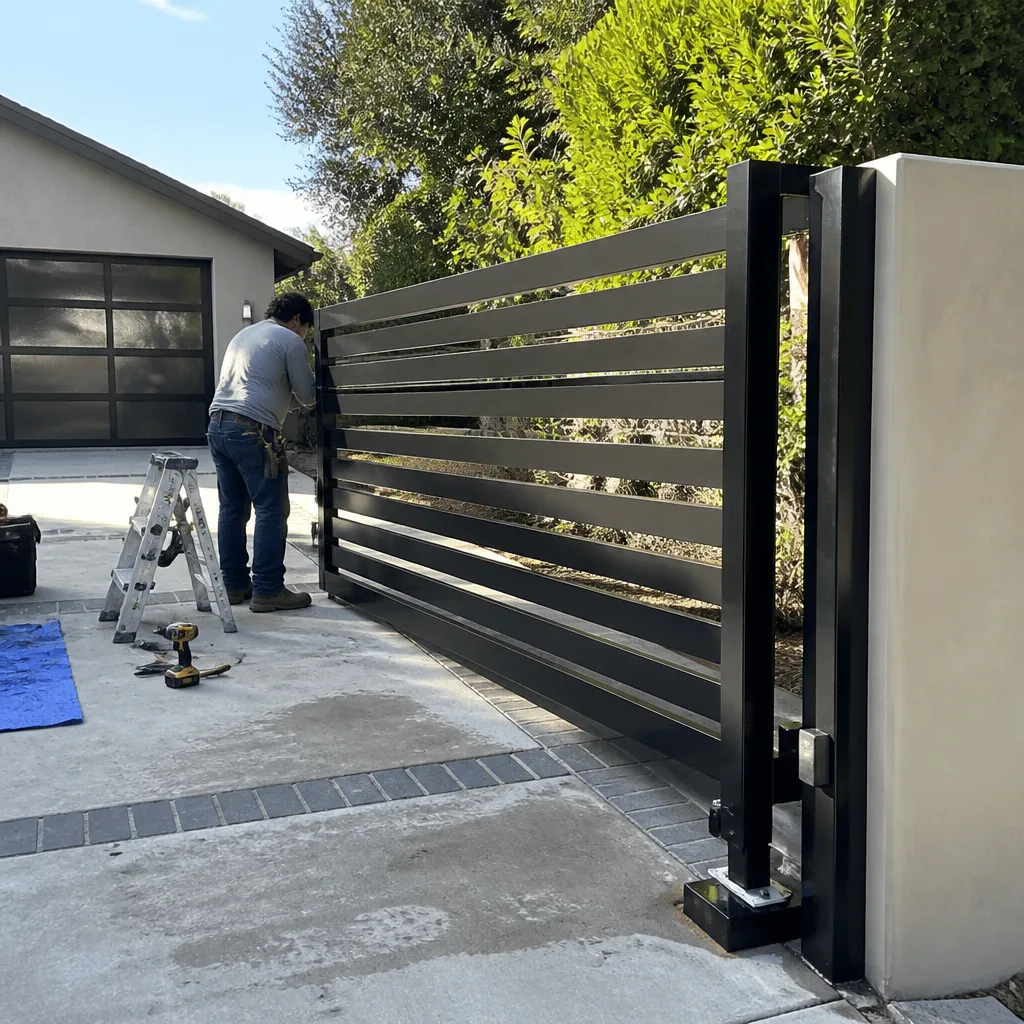 After
After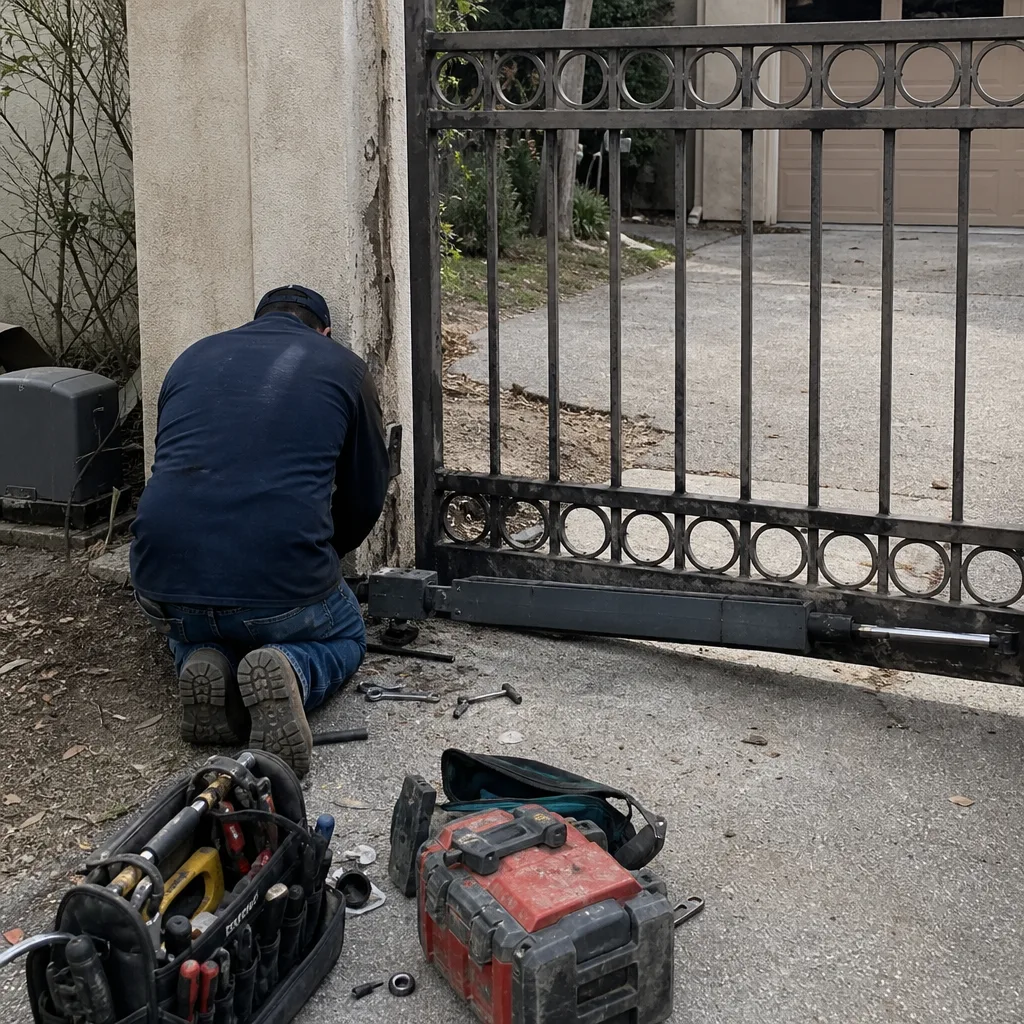 Before
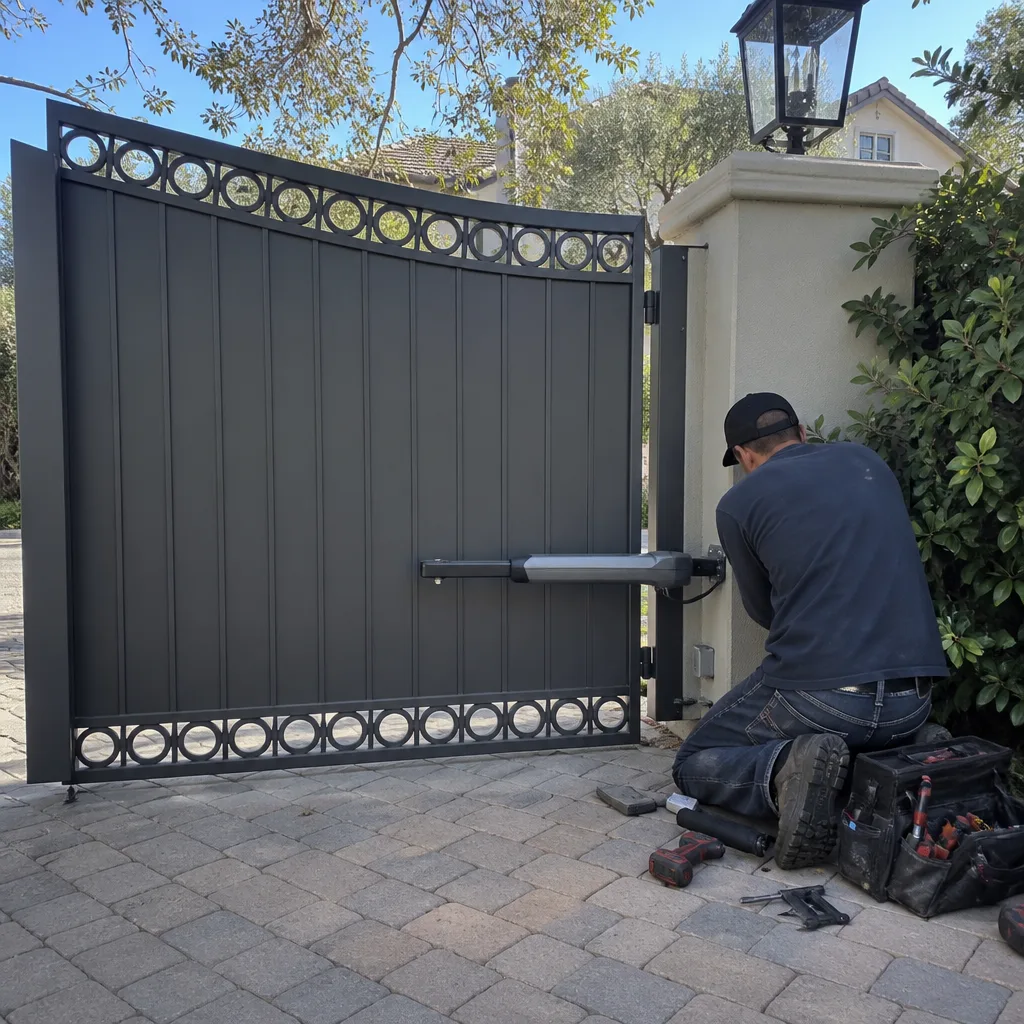 After
After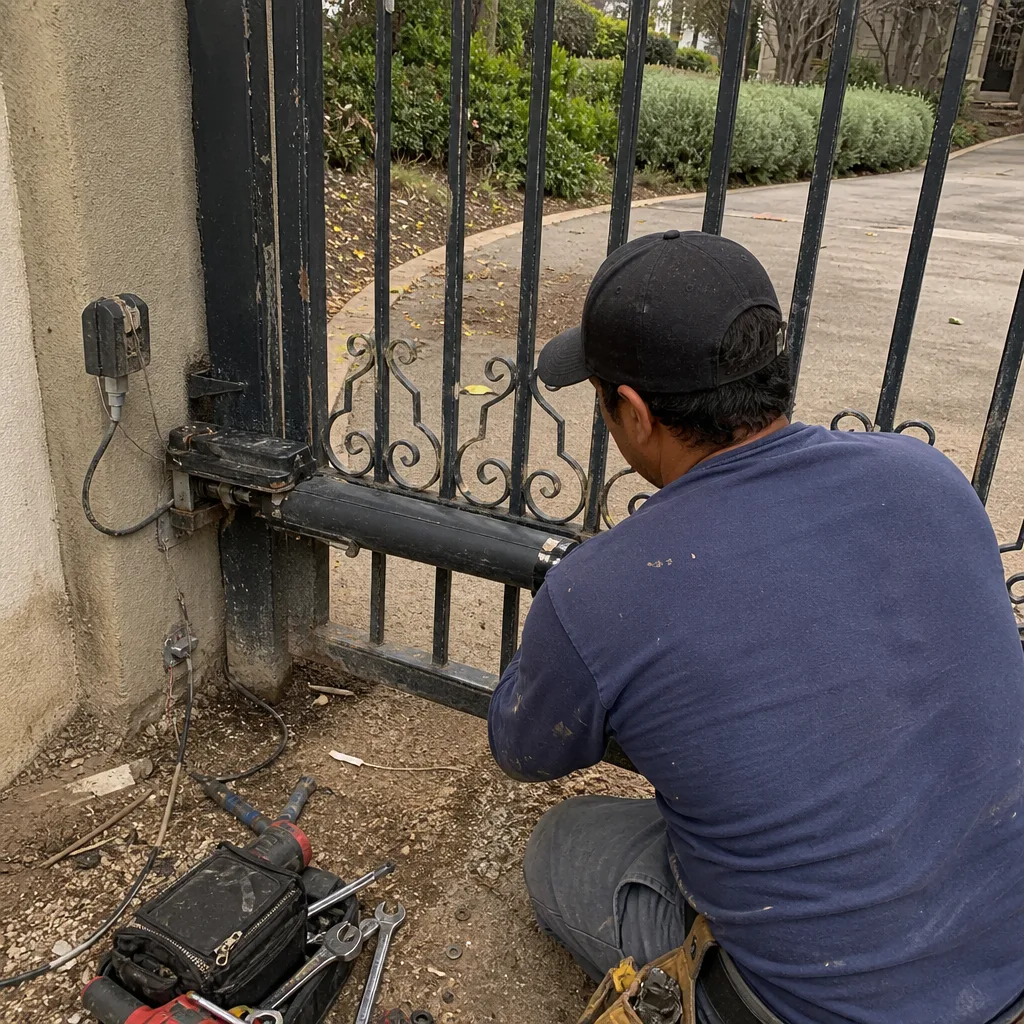 Before
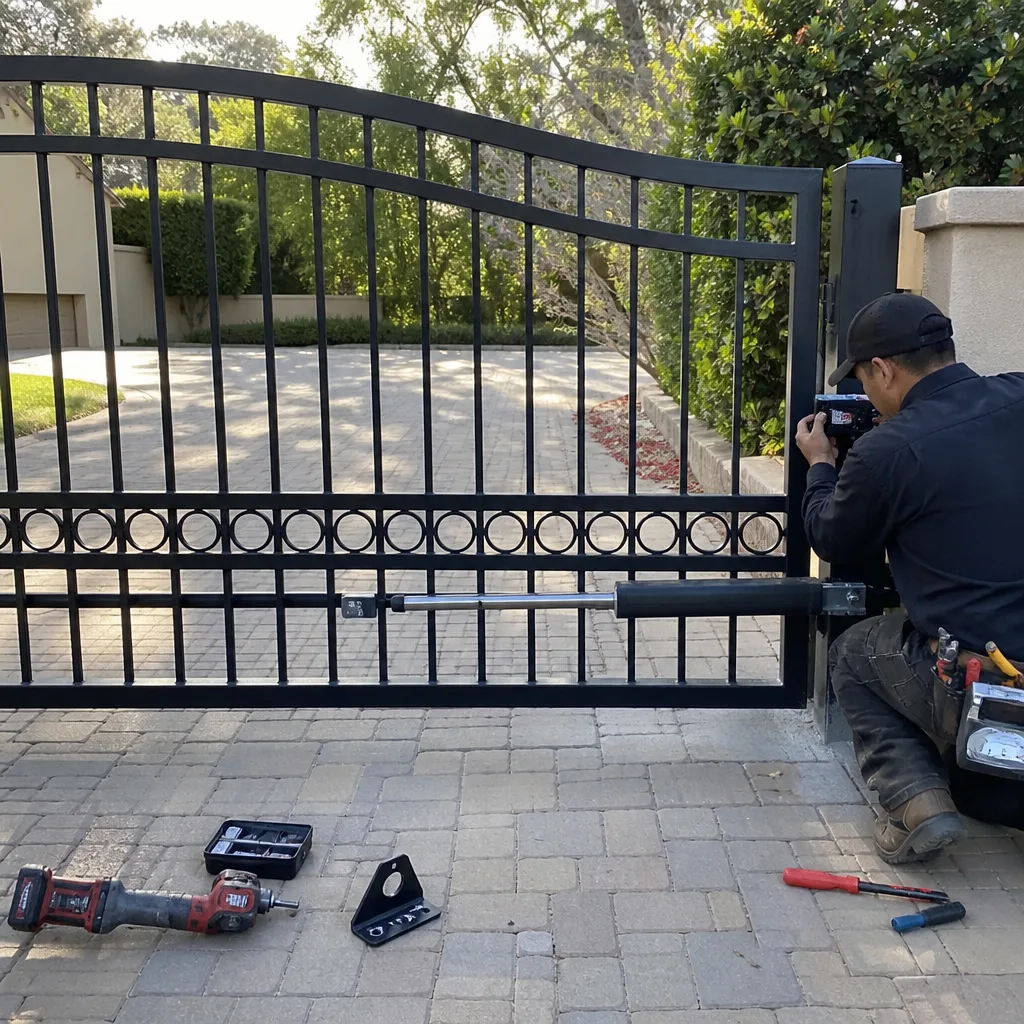 After
AfterSeasonal Gate Repair Care for Calabasas: Year-Round Homeowner’s Guide
Most gate failures in Calabasas don’t happen the day after a storm. They happen three months later, on a Tuesday afternoon, when the sun is out and the gate simply refuses to move. That’s the nature of a seasonal climate: heat and drought work slowly, invisibly, until the metal fatigues or the motor gives out. This guide covers what Calabasas homeowners need to know about keeping a driveway gate working through every season, from the summer heat that warps steel to the winter rains that find their way into motor housings. You’ll learn what to check each season, what to leave alone, what things cost in this market, and when to pick up the phone.
Quick Answer
Seasonal gate care in Calabasas comes down to four things: lubricate the hinges and wheels every spring and fall, check the safety sensors and battery backup before the winter rain season, tighten hardware after the Santa Ana winds, and have the opener motor serviced once a year. Most seasonal problems in this area trace back to heat expansion in summer and moisture intrusion in winter. A simple visual check takes ten minutes and prevents most breakdowns.
Table of Contents
- Spring: Post-Rain Inspection and Lubrication
- Summer: Heat, Warping, and Motor Strain
- Fall: Santa Ana Wind Preparation
- Winter: Rain, Drainage, and Battery Backup
- Hardware That Wears First on Calabasas Gates
- Gate Automation: Seasonal Care for Motors and Opener Brands
- What Seasonal Gate Maintenance Costs in Calabasas
- Common Mistakes to Avoid
- When to Call a Professional
- Frequently Asked Questions
Spring: Post-Rain Inspection and Lubrication
Calabasas winters are mild by most standards, but the city still gets between 15 and 20 inches of rain in a typical year, and much of it arrives between January and March. That water settles into gate tracks, hinge pins, and the seams of welded joints. By the time spring arrives, the damage has been done whether you see it or not: surface rust has begun, grease has washed thin, and any crack in the paint has let moisture into the steel.
Spring is the time to walk the gate slowly and look at everything. The inspection takes about ten minutes. Here’s what actually matters in Calabasas, where the soil is clay-heavy and expands after rain:
- Check the gate’s swing path. After a wet winter, clay soil in neighborhoods like Mulwood, The Oaks, and Mountain View Estates can shift enough to change the grade under a gate. If the gate scrapes the ground or catches on a high spot, the hinges carry extra load every single cycle.
- Look at the hinge pins and bolt heads. Rust shows first where two pieces of metal touch. Light surface rust is normal. Flaking or pitting is not.
- Test the safety sensors. Winters in Calabasas bring debris: leaves from the oaks, mud, and the occasional downed branch. Sensors get dirty and misaligned. If the gate reverses for no reason or refuses to close, the sensors are the first suspect.
- Lubricate. A lithium-based grease on hinge pins and a silicone spray on the track and wheels is the standard approach. WD-40 is not a lubricant and will not hold up to a Calabasas summer.
- Check the auto-reverse function. Hold a piece of cardboard in the gate’s path and close it. The gate should reverse before crushing the cardboard. If it doesn’t, stop using the gate and call a technician.
One thing we’ve seen repeatedly in Calabasas is a gate that works fine all spring and then binds in June. The cause is almost always the same: a homeowner re-lubricated with the wrong product in April, and the heat turned it to varnish by summer. Use a proper lithium grease on the pins and a dry silicone on the rollers. A $12 tube of the right grease saves a hinge replacement that can run into the hundreds.
Summer: Heat, Warping, and Motor Strain
Calabasas regularly sees summer temperatures above 95°F, with stretches over 100°F in the western canyons and along Mulholland Highway. Steel expands in that heat. A solid steel gate that swings perfectly at 75°F can be 3/8 of an inch longer at 105°F. That’s enough to make the latch bind, the swing path scrape, or the gate sit against the post in a way it never did in April.
The bigger issue is the opener motor. Gate motors are rated for a certain duty cycle, and that rating assumes normal operating temperatures. When the ambient temperature is 100°F and the motor is mounted inside a metal housing that catches direct sun, the thermal cut-off can trip. The gate stops mid-cycle and won’t move until the motor cools. Homeowners in Calabasas call about this every summer, and the fix is rarely a new motor. It’s usually a question of adjusting the force settings, checking the capacitor, or relocating the control board to a cooler spot.
Here’s what to do in summer:
- Watch the gate at the hottest part of the day. If it’s slower in the afternoon than in the morning, the motor is working against heat and needs attention before it fails completely.
- Keep the motor housing clear. Plants, stacked firewood, and even tall grass around the motor housing reduce airflow. Give the housing at least two feet of clearance on all sides.
- Check for warping. A gate that rubs the post in summer but not winter has a heat-expansion problem. The fix is usually a hinge adjustment, not a new gate.
- Don’t ignore unusual noises. A grinding noise in summer is often the gearbox in a DoorKing or LiftMaster opener working against a heat-stiffened chain. The longer it runs that way, the more it costs to fix.
Heat is also the season when batteries fail. If your gate has a battery backup and the battery is more than three years old, test it in August. Disconnect the power and run the gate on battery. If it struggles, replace the battery before the rainy season when you’ll actually need it.
Fall: Santa Ana Wind Preparation
Santa Ana winds are a Calabasas fact of life. Between September and November, gusts can reach 40 to 60 miles per hour in the canyons and along the 101 corridor. A driveway gate is essentially a large, flat sail. A 16-foot steel gate in a 50 mph gust can generate several hundred pounds of lateral force on the hinges and the opener’s drive arm.
Fall preparation is about tightening, not lubricating. Here’s the checklist we recommend in October:
- Check every visible bolt and bracket. Wind loads work hardware loose over time. A socket wrench and fifteen minutes of attention prevents a gate swinging off its hinges in November.
- Inspect the hinge welds. This is the one job a homeowner should not attempt. Welds crack from fatigue, not just from impact. A hairline crack in a weld is invisible to most people but is the difference between a gate that holds and a gate that falls. If you see any crack, any at all, call a professional.
- Test the gate’s manual release. If a windstorm knocks out power, you need to know the gate will open manually. The release mechanism is different on every brand: DoorKing, Elite, Mighty Mule, and LiftMaster all have their own designs. Test it once in the fall so you’re not fumbling with a flashlight in a blackout.
- Trim vegetation near the gate’s travel path. Wind-blown branches are a real hazard. A branch caught in the track or the chain can shear a sprocket or bend a drive arm.
- Check the gate stops. The mechanical stops on the ground or the post take a beating in high wind. If they’re loose or deformed, the gate over-travels and the opener’s internal limits get confused.
Santa Ana winds also carry dust and grit. After the first strong wind event of the season, wipe the gate’s track and chain clean. Grit works its way into rollers and sprockets and accelerates wear. It’s a small thing that matters.
Winter: Rain, Drainage, and Battery Backup
Calabasas winters are wet, but not cold. The temperature rarely drops below 40°F, which means ice is almost never a factor. But rain is. The city’s winter storms can dump several inches of water in a single day, and that water finds its way into places it shouldn’t be.
The most common winter failure in Calabasas is a control board that gets wet. On many gate opener installations, the control board lives inside the motor housing at the base of the gate. If the drainage around the gate pad is poor, water pools at the base and seeps into the housing. A single wet winter can destroy a control board, and replacement costs typically start around $450 for a basic board and go up from there for brands like LiftMaster and Elite.
Here’s the winter checklist:
- Verify drainage around the gate posts and motor base. Water should flow away from the gate, not toward it. If the area floods during a storm, regrade or add a channel drain.
- Inspect the gate’s paint and finish for chips and scratches. Bare metal plus rainwater equals rust. Touch up any bare spots before the rainy season.
- Test the battery backup under load. Unplug the opener and run the gate through a full open-close cycle. If it’s weak, replace the battery. A battery that works in September may not work in January.
- Check the weather seals on the motor housing. The rubber gaskets around the housing’s access panel dry out and crack over time. Replacing them is cheap insurance.
- Listen for changes in the opener’s sound. A motor that sounds labored during cold, damp weather may have moisture in the gearbox or a failing capacitor.
Winter is also the busy season for gate service in Calabasas. Gates fail during storms, and every gate company in the area is slammed. A fall tune-up that catches problems early is cheaper and faster than an emergency call in the rain.
Hardware That Wears First on Calabasas Gates
In our experience working on gates across Calabasas, from the estates of Hidden Hills to the newer developments near Lost Hills, the same components fail over and over. This isn’t a matter of bad luck. It’s physics: certain parts carry more load, get more sun exposure, or sit closer to irrigation water than others.
Here are the parts we replace most often, in order:
- Hinge pins and bushings. On a swing gate, the hinges carry the entire weight of the gate. Every open-close cycle wears the bushings a little more. After ten or fifteen years, the gate sags. A sagging gate is harder on the opener, the latch, and the hinge welds themselves.
- Track and rollers on slide gates. Calabasas has a lot of slide gates, especially on hillside properties where a swing gate would need to be unmanageably long. The track collects dirt, the rollers wear, and the gate starts to bind. Cleaning and lubricating the track buys time, but once the rollers show flat spots, replacement is the only fix.
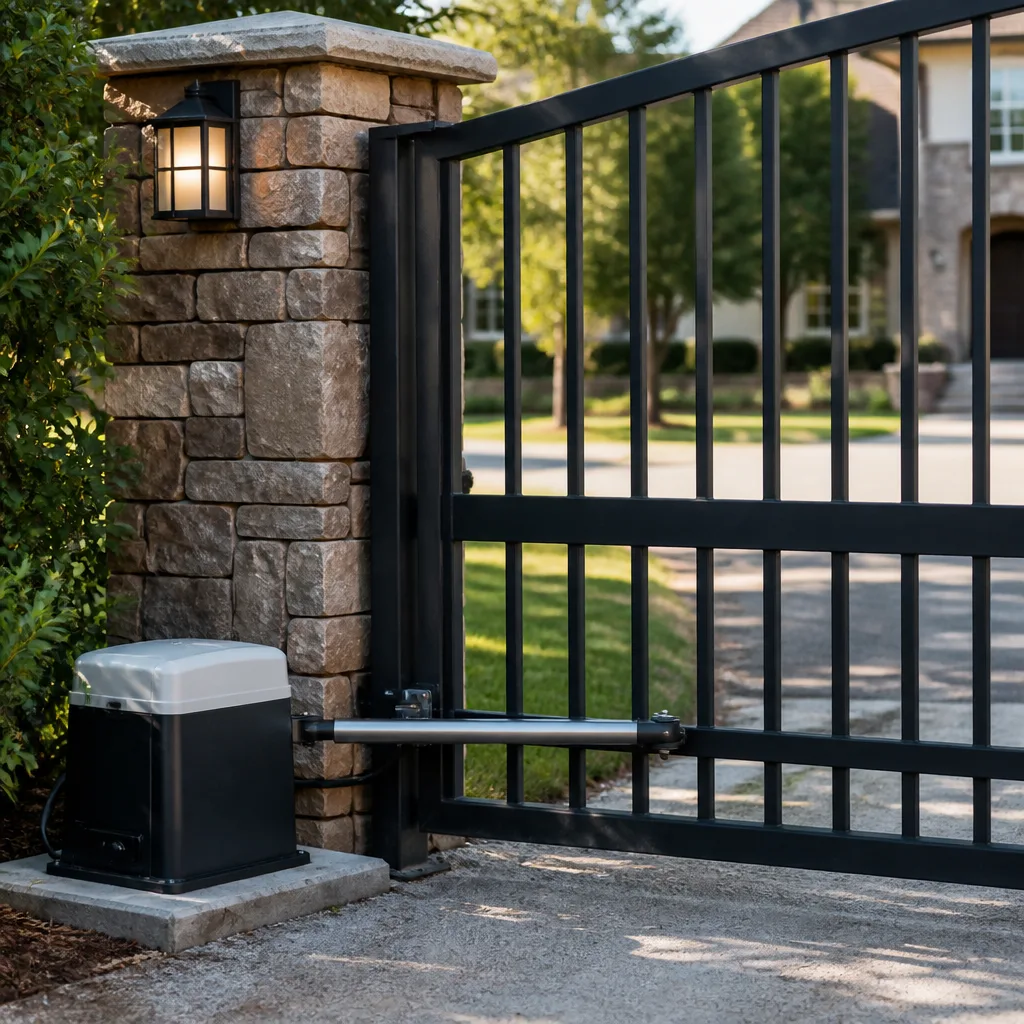
- Opener drive arms. The arm that connects the opener to the gate is the part that absorbs the most shock. When a gate is pushed by wind, struck by a car, or simply operates thousands of times a year, the drive arm bends or the connection points loosen.
- Chain and sprockets. Chain-drive openers like the Mighty Mule and some LiftMaster models use a chain that stretches over time. A stretched chain jumps teeth, makes noise, and eventually fails. Sprockets wear with it.
- Photo eye sensors. The little sensors on either side of the gate track are fragile. They get hit by lawn equipment, knocked out of alignment by wind, and fouled by spider webs. Most “my gate won’t close” calls turn out to be a sensor issue.
- Battery backup units. Every battery fails eventually. In Calabasas heat, they fail faster. A three-year-old battery is on borrowed time.
None of these failures are mysterious. They’re predictable. That’s the point of seasonal care: you catch the part that’s wearing out before it fails completely and leaves your gate stuck open, stuck closed, or stuck halfway.
Gate Automation: Seasonal Care for Motors and Opener Brands
Gate motors are not all the same. We service nine major automation brands, and while the seasonal care principles are similar across all of them, there are differences worth knowing. The brand of opener on your gate affects how it behaves in Calabasas weather and what kind of seasonal attention it needs.
LiftMaster openers are common on residential gates in Calabasas, and they’re generally reliable in heat. The weak point is the capacitor, which degrades faster when the motor housing sits in direct sun. If your LiftMaster hums but the gate doesn’t move, the capacitor is the usual suspect.
DoorKing units are built for commercial duty cycles, and many are installed on larger estate gates. They’re heavy and durable, but they’re sensitive to moisture. A DoorKing control board that gets wet is an expensive repair. Keep the housing sealed and the drainage clear.
Elite openers are also common in Calabasas, particularly on slide gates. They use a magnetic lock in many installations, and that lock needs periodic cleaning. Dust and grit from Santa Ana winds will eventually keep the magnet from seating properly.
Mighty Mule units are popular for lighter residential gates, and they’re the most likely to struggle with heavy heat. The plastic housing expands and contracts, and the internal gears are not designed for gates that bind. If your Mighty Mule gets noisy in summer, the gate itself is likely the problem, not the motor.
Here’s the seasonal automation care routine we recommend, regardless of brand:
- Spring: Check the force settings. A gate that needs more force to open in spring than it did in fall has a developing mechanical problem.
- Summer: Keep the motor housing shaded if possible. A simple awning or strategically placed shrub makes a real difference in motor temperature.
- Fall: Test the manual release and check the battery backup. You want both working before the wind and rain arrive.
- Winter: Keep the control board dry. Check the housing gasket and verify drainage.
One more note on automation: the motor is almost never the first thing to fail. The mechanical parts of the gate fail first, and the motor burns itself out trying to move a gate that fights back. That’s why seasonal care starts with the hinges, the track, and the hardware. A well-maintained gate makes the opener’s job easy, and an opener that works easy lasts years longer.
What Seasonal Gate Maintenance Costs in Calabasas
Understanding what gate service costs in Calabasas helps you budget and helps you spot a quote that doesn’t make sense. Here are the typical price ranges we see in this market for common seasonal and repair work:
| Service | Typical Range in Calabasas |
|---|---|
| Seasonal tune-up (inspection, lubrication, adjustments) | $89 - $180 |
| Hinge pin and bushing replacement (swing gate) | $220 - $450 per hinge |
| Roller replacement (slide gate) | $180 - $350 per set |
| Track cleaning and alignment (slide gate) | $120 - $250 |
| Photo eye sensor replacement | $90 - $200 |
| Battery backup replacement | $150 - $300 |
| Control board replacement | $450 - $900 |
| Opener motor replacement | $850 - $1,800 depending on brand |
| Full gate installation (new, standard driveway gate) | $3,500 - $12,000 depending on size and material |
These are honest ranges for Calabasas. The final number depends on the gate’s size, the opener brand, and how long the problem has been developing. A gate that’s been binding for two years costs more to fix than one that was caught early.
We offer an $89 seasonal tune-up for Calabasas homeowners, and we quote every repair with the price settled before any work begins. There’s a free second opinion available on any written estimate from another company, and a $50 discount on any repair over $250. Seniors and veterans get a standing 5% discount.
Call (747) 308-3262 for an exact quote on your gate, whether it’s a seasonal tune-up or a full replacement. Estimates are free, and someone will answer the phone.
Common Mistakes to Avoid
- Using WD-40 on gate hinges. WD-40 is a water displacer, not a long-term lubricant. In Calabasas summer heat, it evaporates within weeks and leaves the hinge dry and prone to wear. Use a lithium-based grease.
- Skipping the fall inspection because the gate works fine. Gates almost always work fine right up until they don’t. The point of seasonal care is finding the problem before it becomes an emergency. A gate that fails during a winter storm in Calabasas can take days to get repaired because every gate company is booked solid.
- Ignoring a gate that’s slightly slower than it used to be. A gate that’s slower in the afternoon than in the morning is telling you something about heat load on the motor or binding in the hardware. Neglect it long enough and it becomes a motor replacement instead of an adjustment.
- Attempting to adjust garage-door springs, chain tension, or motor force settings without training. The tension springs on a gate or opener mechanism store enormous energy. A spring under tension can cause serious injury if released improperly. This is one job to leave to a professional, every time.
- Assuming a new motor will fix a gate that binds. The motor is not the cause of the binding; the binding is the cause of the motor’s death. Replace the motor without fixing the underlying problem and you’ll replace it again in a few years.
- Waiting for the rainy season to test the battery backup. Batteries fail in the heat, not the cold. Test them in summer. By the time you need the battery in a January storm, it’s too late to find out it’s dead.
- Letting vegetation grow against the gate or the motor housing. It looks harmless, but it blocks airflow, traps moisture, and provides a highway for insects into the motor housing. Keep two feet of clearance.
When to Call a Professional
Some jobs are homeowner maintenance. Others need training, tools, and experience. If your gate has a cracked hinge weld, a motor that trips its thermal overload, a control board that’s been wet, or a spring that’s making noise, call someone who does this work every day. The stakes on a heavy driveway gate are real: a 400-pound gate with a failing hinge can cause serious injury. The safety systems on an automatic gate exist for a reason, and when they’re not working, the gate is dangerous to people, pets, and vehicles.
Ironworks Gate Co. offers free estimates in Calabasas. Ironworks Gate Co. home is where you’ll find the details on our gate repair, installation, and automation services. For anything urgent, call (747) 308-3262 and a live person will answer, day or night.
Frequently Asked Questions
A full professional service once a year is the standard recommendation for Calabasas homeowners, with a homeowner-performed visual inspection every three months. The $89 seasonal tune-up covers lubrication, sensor testing, force adjustment, and a close look at all the hardware. Call (747) 308-3262 to schedule yours.
Basic repairs like sensor replacement or track cleaning run $90 to $250. Hinge work, roller replacement, and control board issues run $220 to $900. Full opener replacement runs $850 to $1,800. Every quote is settled before work starts, so there are no surprises on the bill.
In most cases, yes. A live person answers the phone 24 hours a day, 7 days a week, and most repairs in Calabasas are completed in a single visit. Call (747) 308-3262 and we’ll tell you exactly when we can be there.
The tune-up includes a full inspection of the gate and opener, lubrication of hinges and rollers, sensor cleaning and alignment, force and limit adjustments, and a written report of anything that looks like it’s wearing out. It’s the cheapest way to avoid an expensive emergency repair.
We’re trained and equipped on nine major gate-automation brands, including LiftMaster, DoorKing, Elite, Mighty Mule, FAAC, BFT, Linear, Viking, and Ghost Controls. Whatever opener is on your Calabasas gate, we can service it.
LiftMaster and DoorKing generally handle Calabasas summer temperatures best, provided the motor housing has good airflow and the gate itself moves freely. No opener copes well with a binding gate, regardless of brand. Keep the hardware maintained and the motor will last.
The Bottom Line
Calabasas gates fail on a seasonal schedule. Heat expands the steel and strains the motor. Rain finds its way into control boards. Santa Ana winds shake hardware loose and load the hinges. The cure is unglamorous but effective: inspect in spring, watch the heat in summer, tighten in fall, and keep everything dry in winter. Most breakdowns are preventable with ten minutes of attention and a once-a-year professional tune-up. For anything beyond the basics, call (747) 308-3262 and speak to a real person who knows gates. Done right and backed in writing, every time.
Written by Victor Salinas, Owner at Ironworks Gate Co., serving Calabasas since 2013.