
Last updated August 25, 2026
Free on-site gate assessment - hinges, posts, and your LiftMaster or Nice gate operator checked before anything is quoted
The assessment is free and the quote is the invoice.

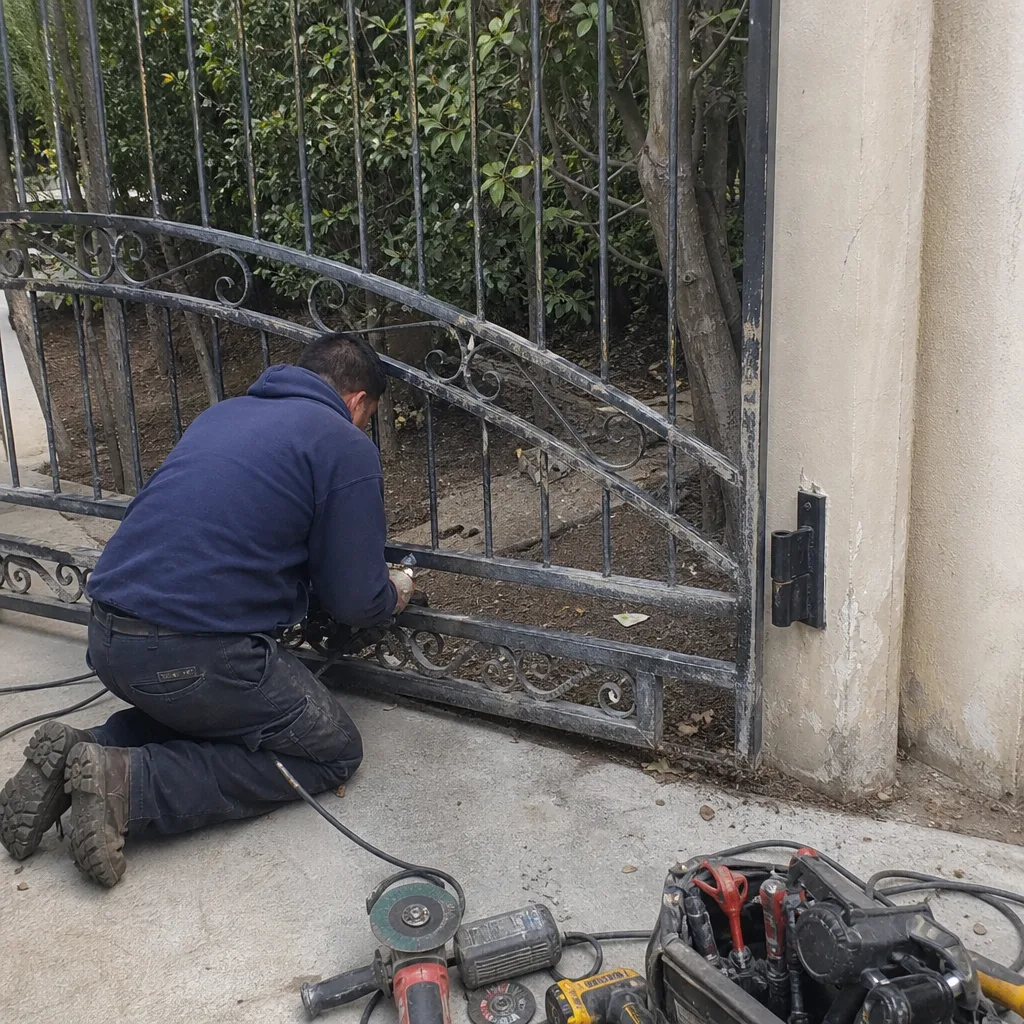 Before
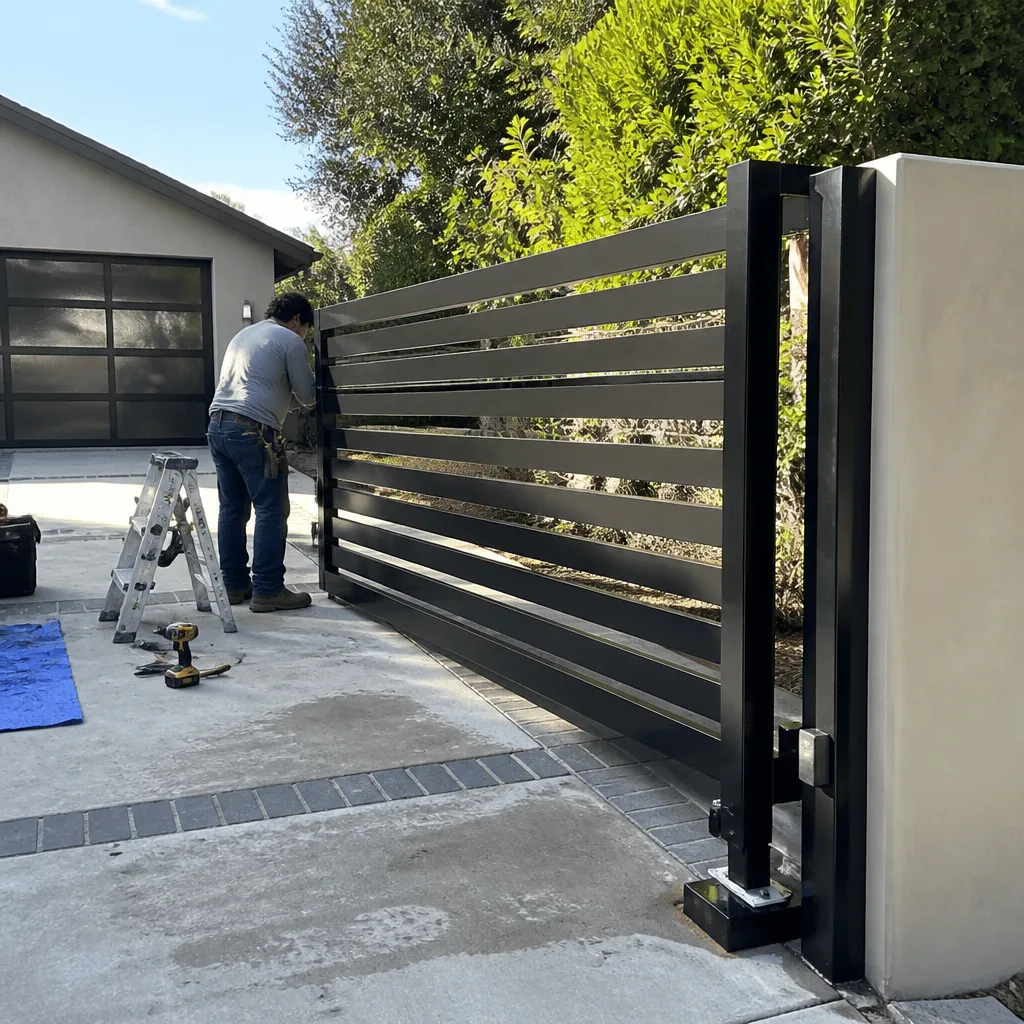 After
After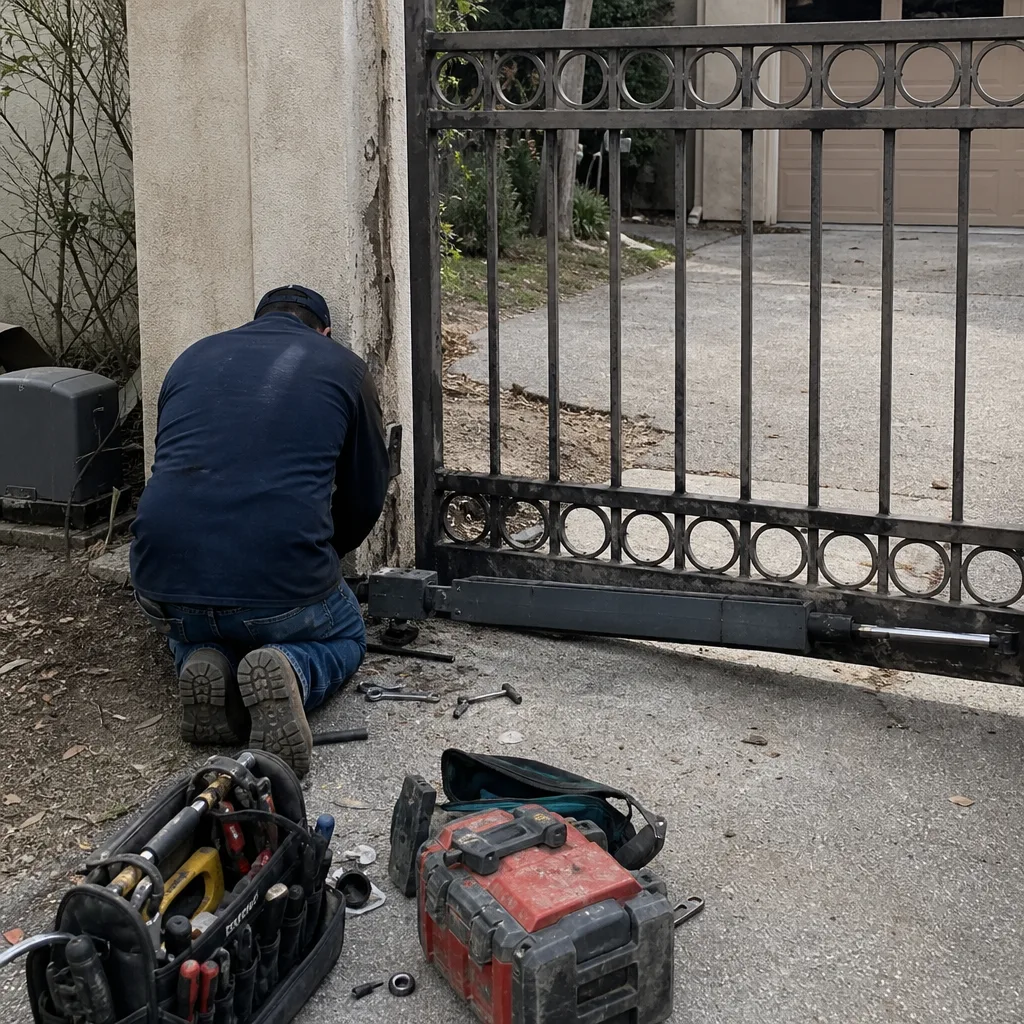 Before
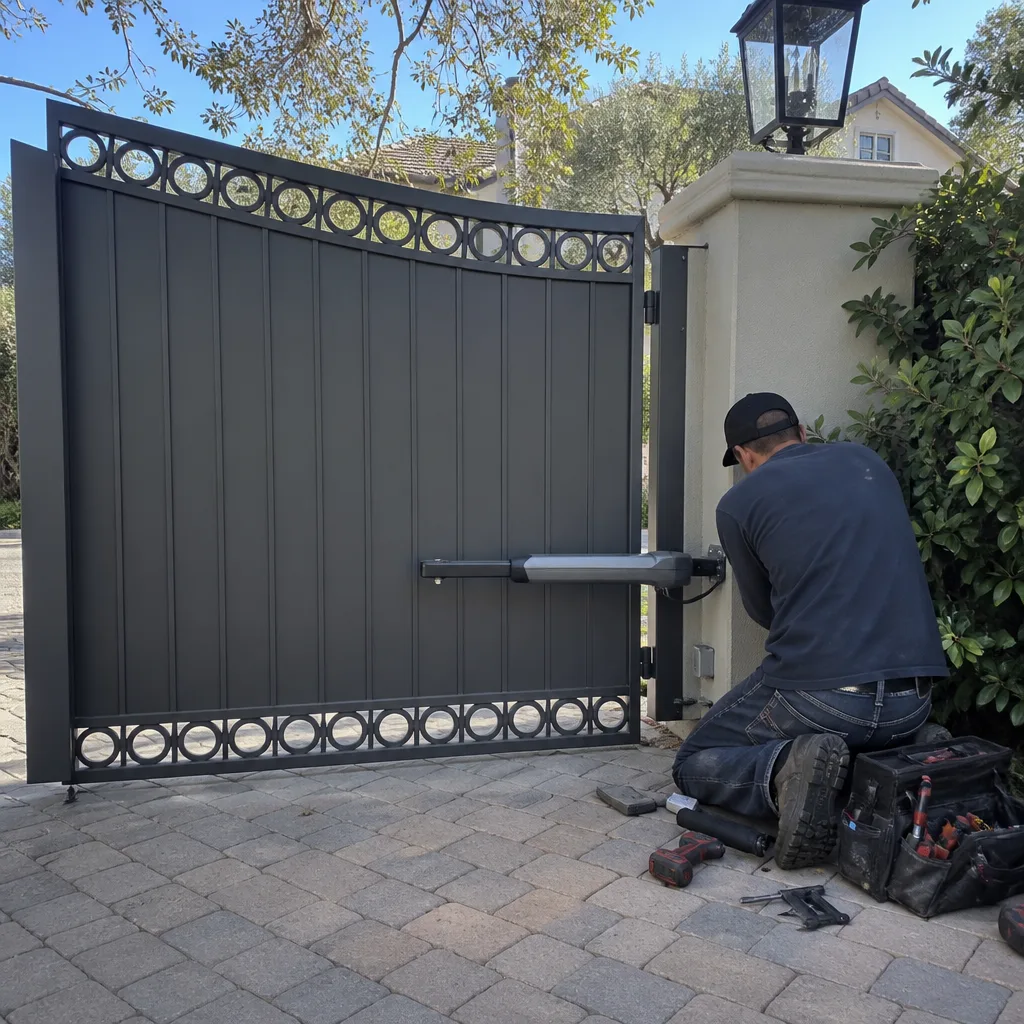 After
After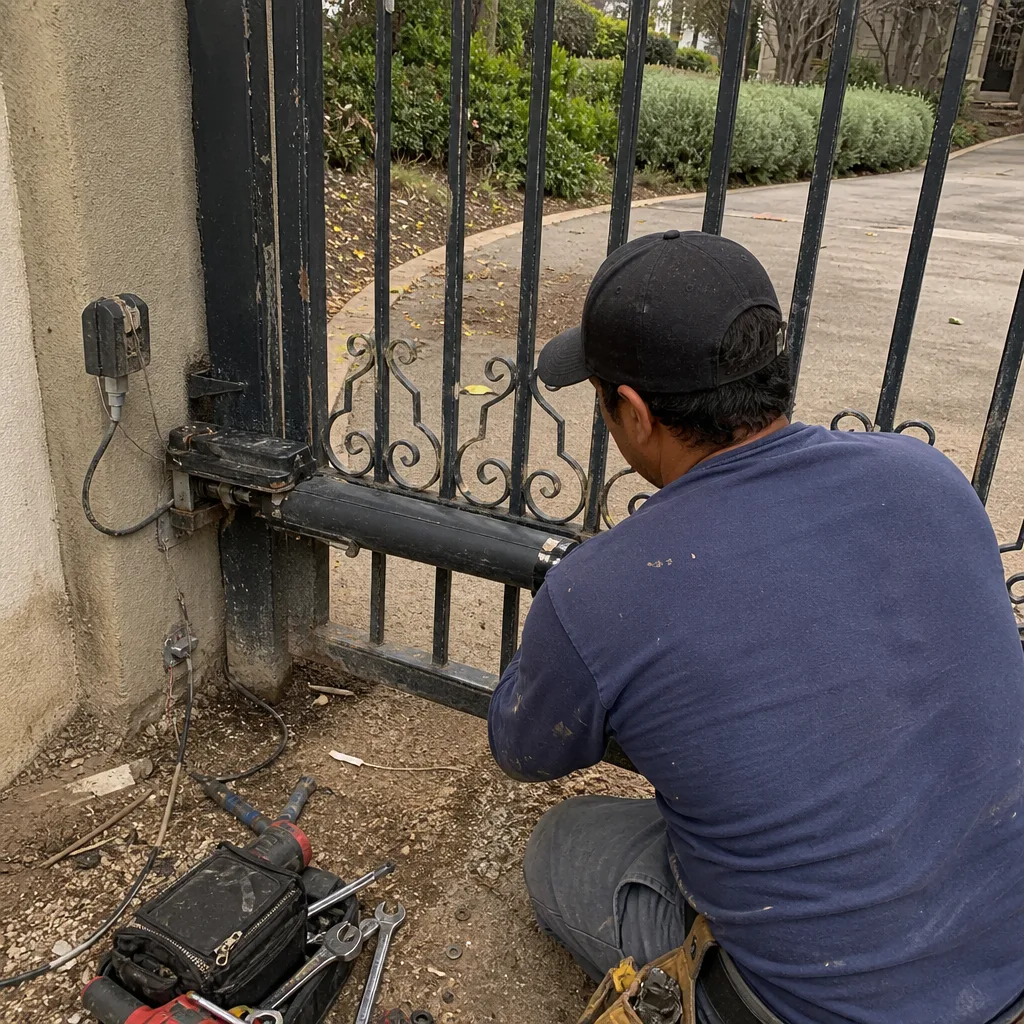 Before
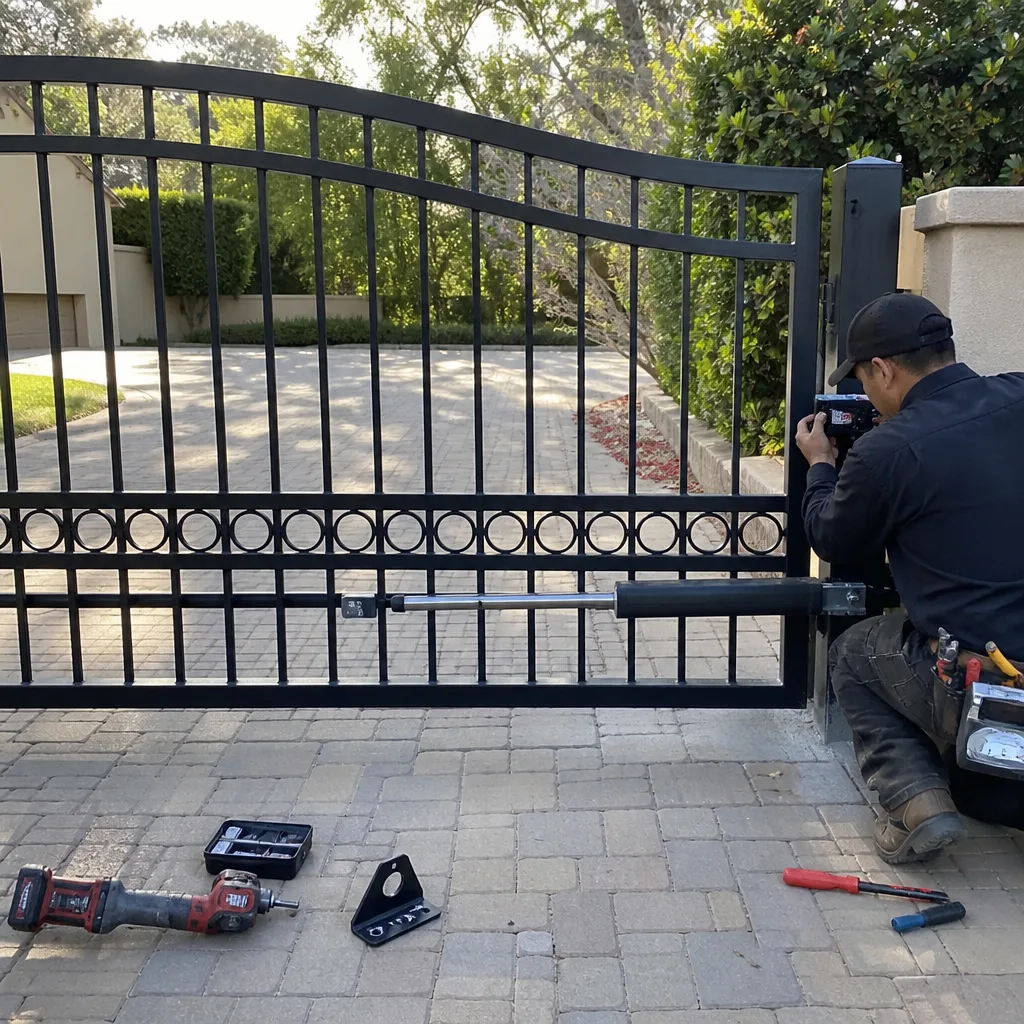 After
AfterDIY vs Professional Gate Repair: The Calabasas Homeowner’s Decision Guide
Most gate repairs in Calabasas fail twice. First, when the gate itself gives out. Second, when a homeowner or a handyman patches the symptom instead of the cause, and the same problem returns three weeks later, usually at 7 a.m. on a Monday. This guide walks through the honest math of doing it yourself versus calling a gate specialist: what actually goes wrong with driveway gates in Calabasas, which jobs are genuinely safe to handle on a Saturday morning, which ones will put you in danger or cost you double, and how to tell the difference before you turn the first bolt.
Quick Answer
For lubrication, cleaning, and visual inspections, a careful Calabasas homeowner can handle the work. For anything involving springs, welded joints, gate motors, circuit boards, or a gate that has come off its track, call a professional. The repair is almost always cheaper than the consequences of a wrong fix, and in Calabasas, a gate that fails is a security gap on a property designed around privacy.
Table of Contents
- Why Driveway Gates Fail in Calabasas
- Jobs a Careful Homeowner Can Handle
- Jobs That Need a Professional
- The Real Costs: DIY vs Professional
- Safety First: What a Wrong Fix Actually Costs
- Brands, Parts, and the Problem with Universal Fixes
- How a Professional Gate Repair Actually Works
- When to Call a Professional
Why Driveway Gates Fail in Calabasas
Calabasas is not a neutral environment for a driveway gate. The same dry heat that keeps the hills golden through September also bakes gate electronics, dries out lubricants, and stresses the metal joints that hold a sliding or swinging gate true. Add the fine dust that blows through the canyons from late spring into fall, and you have a recipe for specific, predictable failures that differ from what a homeowner in Santa Monica or Thousand Oaks deals with.
We see three failure patterns more than any others in Calabasas. First, capacitor and control-board failures in gate openers. The heat inside a metal operator housing on a 100-degree August afternoon can exceed 140 degrees, and capacitors rated for general use simply give up. Second, track and roller wear on sliding gates. Dust acts as an abrasive, accelerating wear on rollers and creating grooves in the track that cause the gate to bind. Third, sagging or binding on wrought-iron swing gates, especially on hillside properties where one gate post has settled slightly over two or three decades, throwing the geometry out of alignment.
Homes in neighborhoods like The Oaks, Mont Calabasas, and Calabasas Hills tend to have larger, heavier gates. Mountain View Estates and the older sections off Mulholland Highway often have custom steel gates that are now 20 to 30 years old. These gates were built well, but they have reached the age where metal fatigue and component wear become real factors. A gate that weighs 400 pounds and has swung open and closed twice a day for 25 years has cycled over 18,000 times. That is a lot of stress on hinges, welds, and motors.
Jobs a Careful Homeowner Can Handle
There is a narrow but real set of maintenance tasks a homeowner can do safely and correctly. These jobs do not require specialized tools, do not involve stored energy or high voltage, and do not put you in a position where a mistake could damage the gate or hurt someone.
Routine lubrication
Hinges, rollers, and chains on mechanical gates need periodic lubrication. A white lithium grease or a silicone-based lubricant applied to hinge pins and roller bearings every six months keeps a gate moving quietly. Avoid WD-40 as a primary lubricant. It is a solvent and water displacer, not a long-term lubricant, and it will strip away the grease that is actually doing the work. In Calabasas, the dry heat means lubricants evaporate or break down faster, so a six-month schedule makes sense.
Cleaning the track and photo-eye sensors
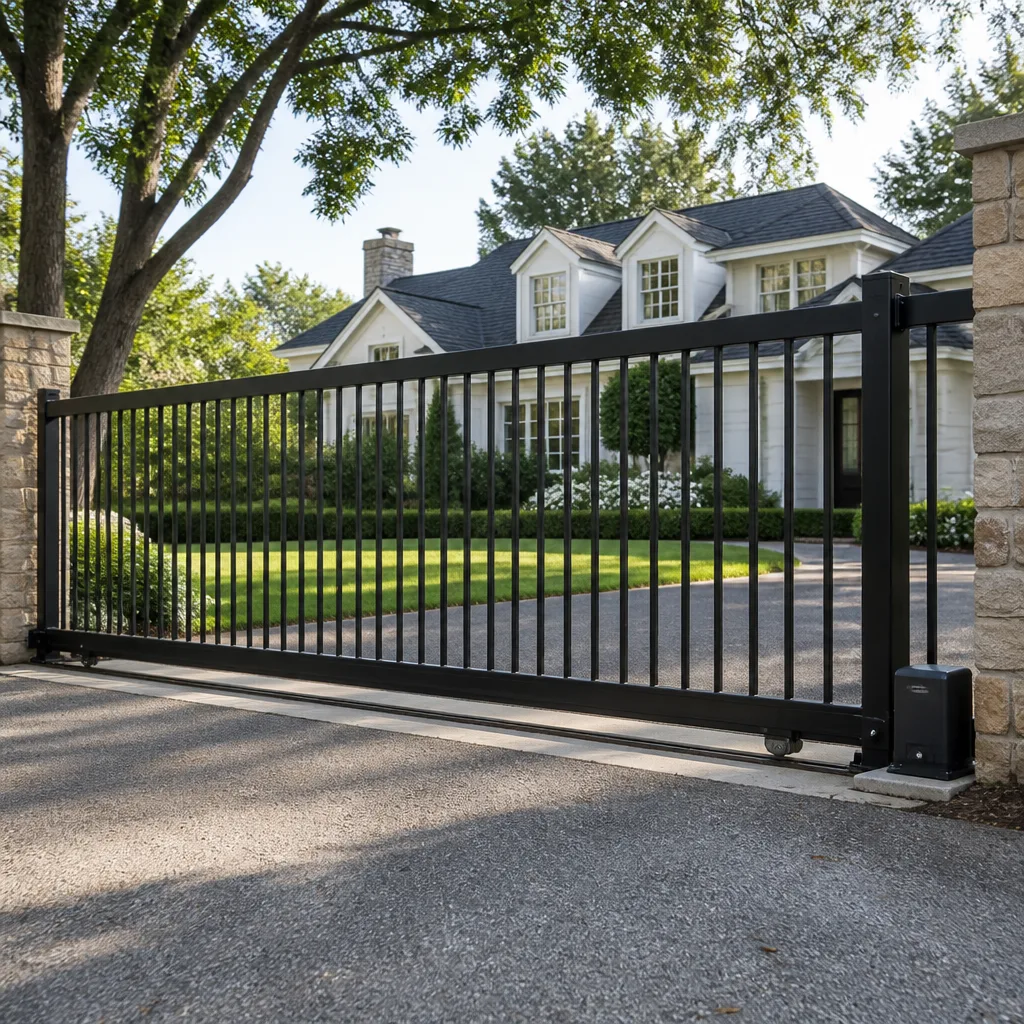
Sliding gates accumulate leaves, dust, and small debris in the track. Cleaning it out with a brush or a leaf blower takes ten minutes and prevents binding. The photo-eye safety sensors at the base of the gate get dusty in Calabasas, and a clean soft cloth over the lens often fixes a gate that refuses to close. If the gate starts and then reverses, check the photo eyes before assuming the board is bad.
Tightening visible bolts and checking hinges
Walk the gate with a wrench and check the bolts you can see and reach. On a swing gate, the hinge bolts where the gate attaches to the post are the first thing to loosen over time. Snugging them up is safe. What you should not do is try to adjust the gate’s alignment or position, which often requires loosening large structural bolts while the gate is under load.
Cleaning the operator housing
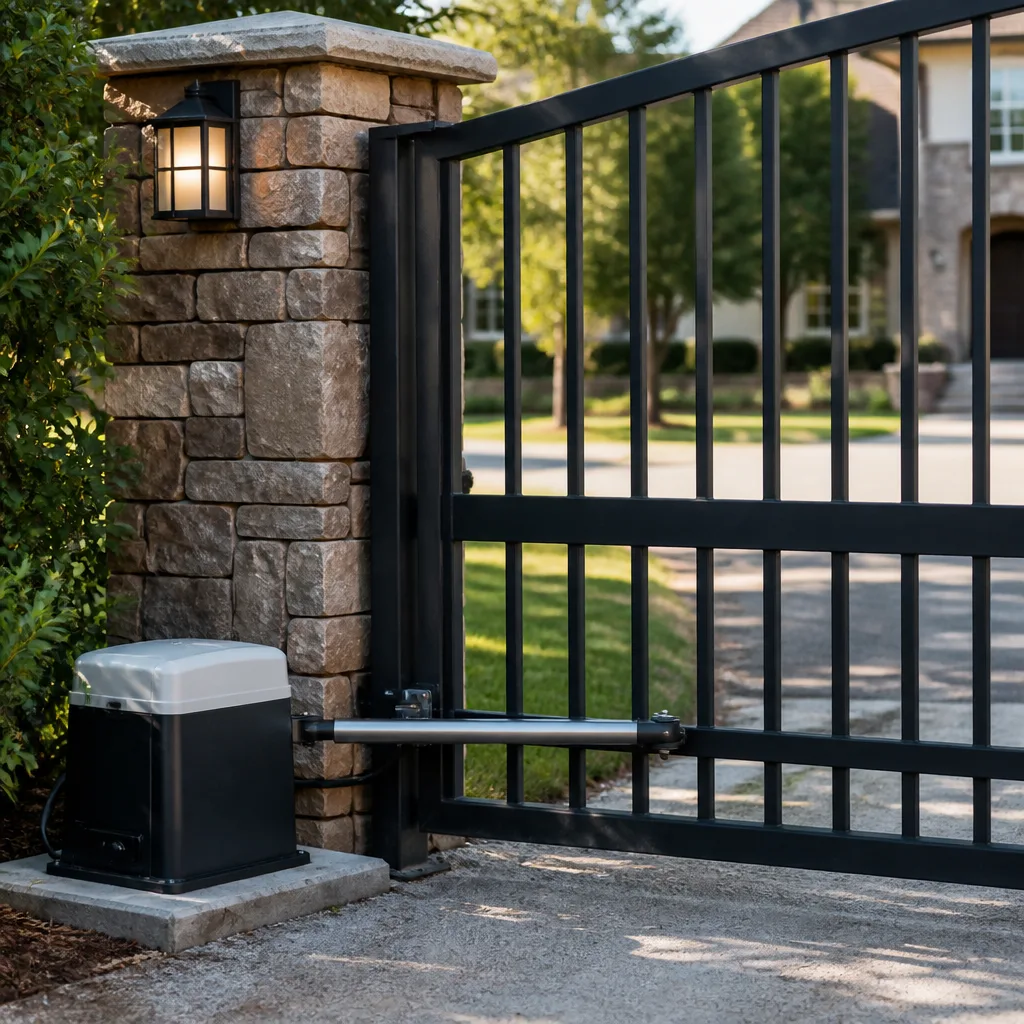
Dust inside the gate motor housing is a real problem in Calabasas. With the power disconnected at the breaker, you can safely open the cover and use compressed air or a vacuum to remove accumulated dust. Do not touch any wiring beyond looking at it. Dust acts as an insulator and traps heat, shortening the life of capacitors and boards. Keeping the housing clean genuinely extends the life of the opener.
Jobs That Need a Professional
Some repairs are not a question of skill but of physics and safety. The following jobs should be handled by a trained gate technician, and in several cases, attempting them yourself is actively dangerous.
Any work involving springs or counterweights
Swing gates often use heavy torsion springs or counterweights to make a 400-pound gate easy to move. Those springs are under constant tension, storing enough energy to break a hand, an arm, or a face if they let go during service. Even professionals treat spring work with respect and use specific procedures. There is no safe shortcut here, and there is no version of this job worth attempting yourself. Call a professional.
Gate off its track or post pulled loose
When a sliding gate comes off its track, the gate’s entire weight is now resting on components not designed to carry it alone. Forcing it back onto the track without correcting what caused the derailment means it will derail again, and the next time it may fall on a car, a child, or a pet. A gate post that has pulled loose from its footing requires excavation, concrete work, and re-setting the post while keeping the gate supported. That is a job for welding and concrete experience, not an afternoon with a come-along.
Motor, limit switch, or control board failures
Modern gate openers from LiftMaster, DoorKing, and Elite run on circuit boards that pair with specific motors, specific limit switches, and specific safety inputs. A control board failure might look like a dead gate, a gate that opens but won’t close, or a gate that moves a foot and stops. Diagnosing those symptoms correctly requires experience with the brand in question. Replacing a board is straightforward once you know what is wrong, but guessing wrong is a $300 mistake before you even fix the real problem.
Welded repairs or cracked metal
Wrought-iron and steel gates develop cracks at stress points - usually at the hinge side or where decorative elements meet the main frame. A crack that is ignored grows, and a gate that fails at a hinge becomes a falling object. Welding a gate in place requires understanding the alloy, the load, and the original construction. A bad weld can be worse than the crack, because it embrittles the surrounding metal and hides the new failure point.
Safety edge or photo-eye wiring problems
These systems exist to keep the gate from closing on a person or a vehicle. When they fail, a gate can become a crushing hazard. Testing and repairing them requires understanding how the opener logic uses the sensor inputs. A bypassed safety edge is a liability and a danger, and some homeowners do exactly that when the gate won’t close, unaware of what they are creating.
The Real Costs: DIY vs Professional
The visible cost of DIY is the price of the part. The real cost is the part plus the tools, the time, and the risk of getting it wrong and paying a professional anyway, after the damage is worse. Here is a realistic look at what common gate repairs cost in the Calabasas market, side by side.
Typical repair costs in Calabasas
- Photo-eye sensor replacement: DIY $25-$50 for the sensor. Professional $90-$180 installed. Low risk either way.
- Hinge lubrication and bolt tightening: DIY $15 for lubricant and an hour. Professional $75-$125 as part of a tune-up service call.
- Capacitor replacement: DIY $20-$40 for the capacitor. Professional $120-$200. The catch: diagnosing a capacitor as the actual problem rather than a symptom of a dying motor is the real skill.
- Control board replacement: DIY $150-$400 for a board, plus the risk of a wrong diagnosis. Professional $350-$800 depending on brand and board. The professional price includes knowing it is actually the board.
- Gate off track, reset and realign: DIY not recommended. Professional $250-$550, and up if track sections need replacement.
- Weld repair on a cracked iron gate: DIY not possible for most homeowners. Professional $150-$450 depending on the location and extent of the crack.
- Full opener replacement: DIY $600-$1,500 for the unit, plus your time, plus the risks of installation errors. Professional $1,500-$3,500 installed and programmed, with the old unit hauled away and the new one tested against the gate’s actual weight and travel.
Notice the pattern. The small, simple jobs have a narrow price gap. The larger jobs have a wide gap in theory and a narrow gap in practice, because when a DIY replacement goes wrong, the professional ends up fixing both the original problem and the new one. In our experience in Calabasas, roughly a third of the repair calls we take for opener problems involve a unit that was either installed or “fixed” by a homeowner or handyman first.
Every professional estimate at Ironworks Gate Co. is settled before the work starts. We quote the job, agree on the number, and do the work for that number. No extras, no surprises on the invoice. We apply the same approach whether it is a $89 seasonal tune-up or a full gate replacement.
Safety First: What a Wrong Fix Actually Costs
Beyond money, a gate is one of the few home systems that can genuinely injure someone when it fails. Current safety standards exist because gates have killed people, mostly children, when safety devices were absent or bypassed. Any repair that leaves a gate able to close with more force than it should, or that disables the auto-reverse or photo-eye safety, creates a hazard that is invisible until the moment it is not.
A sliding gate that comes off its track weighs hundreds of pounds. If it falls toward the driveway while someone is standing there, the result is a serious or fatal injury. A swing gate with a failed hinge weld can swing free or drop without warning. Springs and counterweights under tension release that energy in an instant, and there is no getting out of the way fast enough.
Here is the honest hierarchy of what matters, in order:
- People first. If a gate can close on a person or a pet, or if any component could fail and drop the gate, the repair is not optional and not DIY.
- Property second. A gate that falls on a car is a body shop bill and a tow bill on top of the gate repair. More important, the same failure that hits a car would have hit a person if the timing had been different.
- Cost third. A $220 professional fix that prevents a $2,000 damage event is not an expense. It is the cheapest thing you will pay for all year.
We are not saying this to scare anyone. We are saying it because we have been doing this work in Calabasas for years, and we have repaired too many gates where a homeowner’s first attempt made the situation worse, not better. Most of those repairs could have been prevented with a phone call before the first wrench came out.
Brands, Parts, and the Problem with Universal Fixes
Gate automation is not a commodity. A DoorKing opener on a Calabasas Hills estate gate has different programming, different limit settings, and different wiring than a LiftMaster on a Mont Calabasas driveway. Universal parts and universal advice work for some things, but gates are unforgiving about approximations.
Our technicians are trained and equipped on nine major gate-automation brands: LiftMaster, FAAC, BFT, Linear, Viking, Ghost Controls, DoorKing, Elite, and Mighty Mule. That matters because diagnosis starts with knowing what the manufacturer intended, not what a generic troubleshooting guide assumes. A Mighty Mule that won’t learn its travel limits has a different cause than an Elite with the same symptom. A capacitor failure on a BFT board presents differently than on a Linear.
Online parts sellers are happy to sell you a “universal” replacement board or a generic photo-eye kit. Some of them even work, briefly. The problem is that a universal board does not know your gate’s weight, travel distance, or safety input configuration the way the original board does. It may run the motor at the wrong speed, miss safety signals, or fail to learn the limits correctly. By the time it fails, the return window is closed and the seller is gone.
There is a place for aftermarket components: on simple mechanical repairs, and on brands with broad compatibility. For control boards, limit switches, and motor capacitors, original manufacturer parts are the right call. A Calabasas homeowner can order them and attempt the job. The realistic outcome depends on whether the diagnosis is correct, and that is the part that takes years of experience to get right consistently.
How a Professional Gate Repair Actually Works
If you have never watched a professional gate repair from the inside, the process looks slower than it should. That slowness is doing the job correctly. Here is what a real repair visit looks like, and why it differs from what you get with a handyman.
A typical Ironworks Gate Co. repair visit
- Listen and look. The technician walks the gate through a full open-close cycle before touching anything. They listen for grinding, binding, or motor strain. They look at the track, the hinges, the wheels or rollers, the chain or belt, and the safety sensors. Most problems announce themselves in the first thirty seconds to someone who knows what normal sounds like.
- Test and diagnose. The opener gets tested for voltage, the capacitor gets checked, the limit switches get exercised by hand, and the safety features get verified. The goal is to find the actual cause, not the most obvious one. A gate that won’t close could have a bad board, a dirty photo eye, a misaligned loop detector, or a combination of all three.
- Quote before work. Once the problem is found, you get a number. The price is agreed before a single bolt is turned. There is no “oh, it turned out to be worse” phone call two hours later. If the scope changes, the quote changes with your approval first, but the goal is to get the diagnosis right the first time.
- Repair and test. The fix gets made with the right parts and the right tools. Then the gate is run through multiple open-close cycles, the safety reverse gets tested deliberately, and the limit settings get verified each cycle.
- Walk-through and paperwork. You see what was done, why it was done, and what to watch for going forward. Every job gets the 90-Day Done Right Promise in writing. If it is not right, we come back and make it right. No argument, no fine print, no extra charges.
The whole visit usually takes under two hours for most repairs. More important than the time is what does not happen: no guesswork, no “let’s try this and see,” no bill that lands higher than the quote.
When to Call a Professional
The short version: call when the gate is off its track, when the motor is doing anything unusual, when you hear grinding from the hinges or rollers, when the safety reverse or photo eyes are not working, or when the gate has visibly cracked or sagged. Call when the gate works but sounds wrong. That sound is a problem announcing itself early, and the fix is smaller and cheaper now than it will be in three months.
Call also when you do not know what is wrong. A free consultation costs nothing. What it buys you is a trained set of eyes on a 400-pound machine that is part of your home’s security, and a straight answer about what the job actually needs, even if the answer is “nothing today, but plan for this later.” Ironworks Gate Co. offers free estimates in Calabasas. Call (747) 308-3262.
Common Mistakes to Avoid
- Lubricating with WD-40 and calling it maintenance. WD-40 is a solvent, not a lubricant. It strips existing grease and leaves the metal dry. In Calabasas dust, that means more wear, not less.
- Bypassing a photo eye to make the gate close. If the gate will not close unless you override the safety sensor, the sensor is telling you something. Bypassing it creates a crushing hazard on a gate that used to be safe.
- Tightening a sagging gate by force. Pulling a sagging gate back into position with a winch or a vehicle moves the symptom, not the cause. The post, the hinge, or the weld is the problem, and forcing the gate damages all three.
- Buying a “universal” control board online. The price looks good until the board does not recognize your opener’s motor, or the safety inputs do not map correctly, or it fails in eight months and the seller is unreachable.
- Ignoring a gate that moves slower than it used to. Slower movement means added strain on the motor, the gearbox, or the track. The fix today might be a $120 adjustment. The fix in six months might be a full opener replacement.
- Welding a crack without addressing the cause. A crack at a hinge means the gate is under stress it was not designed for. Welding the crack shut without fixing the alignment means a new crack forms next to the old one.
- Ignoring the $89 seasonal tune-up. A tune-up catches worn rollers, loose hardware, dry hinges, and failing capacitors before they become repair calls. The cost is a fraction of any repair it prevents, and it extends the life of the entire gate system.
Frequently Asked Questions
Most Calabasas gate repairs run between $120 and $800, depending on the problem. Simple fixes like photo-eye replacement or hinge tightening cost $90 to $200. Control board replacements and off-track resets fall in the $250 to $500 range. Full opener replacements run $1,500 to $3,500. Every estimate at Ironworks Gate Co. includes a set price before the work starts. Call (747) 308-3262 for a free estimate on your specific gate.
A handyman can handle basic maintenance like lubrication and bolt tightening. For anything involving the motor, control board, springs, track alignment, or welded repairs, a gate specialist is the right call. The diagnosis is the valuable part of the repair, and a generalist does not see enough gate failures to recognize the patterns. In Calabasas, we regularly repair gates that were “fixed” by a handyman, and the second repair usually costs more than the first one saved.
Dust-related photo eye failures and heat-related capacitor failures are the two most common problems we see in Calabasas. Both are inexpensive to fix when caught early, but both can be misdiagnosed as a bad control board, which is a $400 mistake. A gate that opens but will not close is usually a dirty or blocked photo eye, not a control board failure. A gate that hums but does not move is often a failed capacitor, not a dead motor.
Most repairs are completed in a single visit, typically under two hours. The diagnosis takes ten to twenty minutes. The repair itself depends on the part and the gate, but photo-eye, capacitor, hinge, and bearing work is usually done within an hour. A full opener replacement takes two to three hours. Ironworks Gate Co. carries common parts on the truck, which means most jobs in Calabasas get fixed on the first visit.
Yes. Every new gate installation at Ironworks Gate Co. includes the full electrical scope: the power run, the operator, the safety edges, the photo eyes, the programming, and the final testing. We do not install a gate and leave the automation to someone else. The gate, the motor, and the safety system are designed and installed as a single unit, because that is how they function.
Yes. Ironworks Gate Co. offers a permanent 5% discount for seniors and veterans on every service, including repairs, installations, and tune-ups. Combined with the $50 discount on any repair over $250 and the $89 seasonal tune-up, it is part of how we do business in Calabasas: a square deal, every time. Call (747) 308-3262 and mention the discount when you schedule.
The Bottom Line
Do the maintenance. Skip the repair. A Calabasas homeowner who lubricates the hinges, cleans the photo eyes, and keeps the track clear will prevent a meaningful number of failures and catch the rest early. Beyond that, the math and the physics both point the same way: a professional gate repair costs less than the wrong DIY attempt, takes less of your time, and leaves you with a guarantee in writing instead of a nagging doubt about whether the gate will close tonight.
For an honest assessment of your gate, a free estimate, or a second opinion on a written quote you already have, call Ironworks Gate Co. at (747) 308-3262. A live person answers, day or night. Victor leads the team, and every job, from a $89 tune-up to a full custom gate, gets the same 90-Day Done Right Promise: if it is not right, we come back and make it right. Done right. Backed in writing.
Written by Victor Salinas, Owner at Ironworks Gate Co. home, serving Calabasas since 2013.